

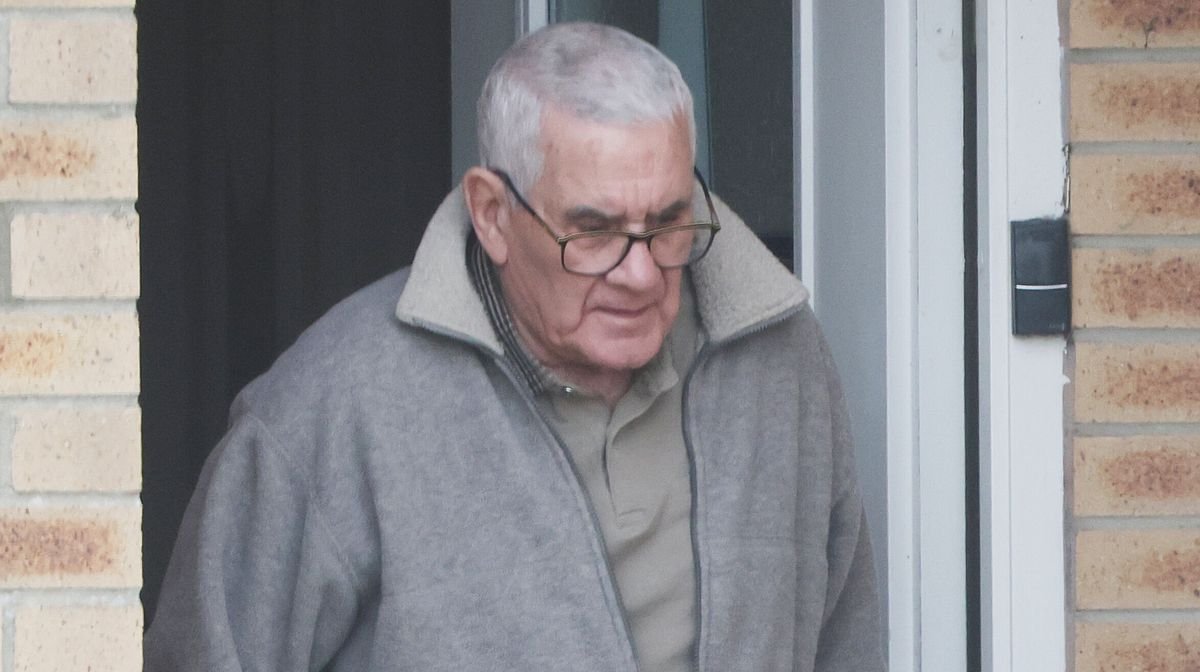

A man who was sentenced to life in prison for the Essex Boys murders has been captured in a photo for the first time since his release. Michael Steele, aged 83, was seen in the county after spending nearly 29 years behind bars for fatally shooting three drug dealers in a Range Rover. Sporting a grey fleece and jeans, Steele was observed engaging in DIY activities outside a residence in his former neighborhood.
The elderly man was freed in May last year after serving his life term for the killings of Tony Tucker, Pat Tate, and Craig Rolfe in Rettendon, Essex. Alongside his former associate Jack Whomes, aged 64, Steele was convicted of using a shotgun to murder the men, although significant doubts linger about the validity of the convictions.
Presently, the Criminal Cases Review Commission is reevaluating the 1995 case for the third time following a report provided by retired Met detective David McKelvey from his investigation firm TM-Eye two years ago. McKelvey has urged the CCRC to conduct forensic tests on crucial exhibits, such as shotgun shell casings recovered from the crime scene, as well as a sweet wrapper and water bottle discovered in the Range Rover.
McKelvey expressed astonishment over Essex police’s auctioning of the vehicle post the incarceration of Steele and Whomes, highlighting the importance of retesting the retained items utilizing the latest forensic techniques. Steele, portrayed by EastEnders actor Billy Murray in a film recounting the murders, regained his freedom after Justice Secretary Shabana Mahmood’s reconsideration application was rejected.
Under strict license conditions, Steele is forbidden from speaking publicly, including to the media. Following a Parole Board assessment in November 2024, it was determined that his release did not pose immediate risks according to witnesses. Whomes was released five years earlier. Assertions presented to the CCRC suggest that an individual identified as “Mr D” could be the actual perpetrator, raising suspicions of potential misconduct by Essex detectives.
The convictions were primarily based on the testimony of fraudster Darren Nicholls, who alleged that Steele, a drug dealer, orchestrated the victims’ deaths due to a prior disagreement. Nicholls collaborated with the prosecution in exchange for a reduced sentence, claiming Steele enticed the victims to a remote location under false pretenses.
Although initially inclined to believe in Steele and Whomes’ guilt, McKelvey’s extensive investigation over three years led to the conclusion that a grave miscarriage of justice had transpired. Nicholls’ association with an Essex detective, along with alleged perjury and coercion by police officers, cast doubts on the integrity of the case.
Nicholls’ involvement in profiting from a book detailing the murders, concealed from the court, further muddied the waters regarding his credibility. The murders, which inspired the film Essex Boys in 2000, stirred controversy and suspicions of police misconduct, prompting ongoing scrutiny by the CCRC and Essex Police.