

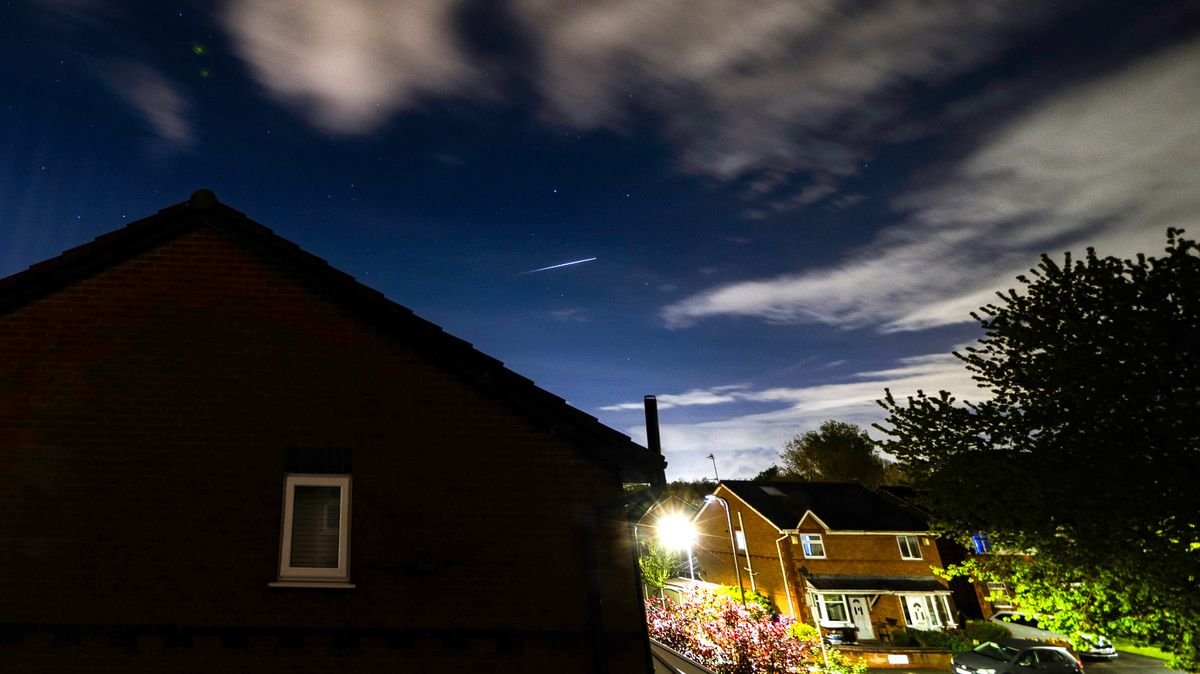

Keen sky watchers are in for a celestial treat with the Lyrid meteor shower illuminating the night sky this month. Expect to see up to 20 shooting stars per hour at its peak from Tuesday night into Wednesday morning.
This year’s meteor shower is enhanced by a faint crescent moon, creating darker skies for optimal viewing conditions.
According to the Royal Observatory’s schedule, the Lyrid meteor shower will be active from April 16th to 25th, with the best viewing day on April 22nd. The constellation Lyra will ascend in the northeastern sky and rise higher as the night progresses.
To locate Lyra, search for Vega, one of the brightest stars visible during this time of year. Vega will be prominent above the northeastern horizon post-sunset and ascend further into the sky throughout the night. Utilizing stargazing apps can assist in pinpointing its location.
For the best meteor viewing experience, avoid staring directly at the radiant point, as the most impressive streaks are often observed slightly off-center. By scanning the surrounding sky and maintaining a general watch above, your chances of spotting meteors are increased.
Under optimal conditions, it is possible to witness 15 to 20 meteors per hour, as noted by NASA and Space.com. The Lyrids are known for their rapid, luminous streaks that occasionally leave glowing trails of dust behind them.
Although the Lyrid meteor shower is visible globally, the best views are in the Northern Hemisphere, making the UK an excellent observation location if the skies remain clear.
Meteor showers occur when Earth passes through debris trails left by comets. As these tiny particles collide with our atmosphere, they incinerate, forming luminous streaks commonly referred to as shooting stars.
The Lyrid meteor shower originates from debris shed by Comet Thatcher, an icy comet that orbits near Earth once every 415 years. While the comet itself is seldom seen, we cross its dusty trail annually in April. The Lyrids hold the distinction of being one of the oldest documented meteor showers, with sightings recorded for over 2,500 years.
If you miss this week’s meteor shower, the next significant event will be the Eta Aquarids in early May, deriving from debris left by Halley’s comet. This offers another opportunity to witness this celestial spectacle and perhaps make a wish.
For quick access to valued news content, designate Daily Mirror as a ‘Preferred Source’ on Google News.