

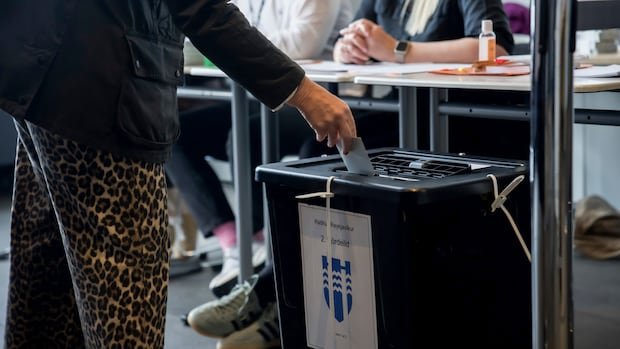

Voters in Iceland took to the polls on Saturday to determine whether the country should reinitiate stagnant discussions to join the European Union, amidst concerns raised by U.S. President Donald Trump’s interests in exerting control over nearby Greenland.
The referendum question posed a straightforward choice for approximately 265,000 eligible voters: Should Iceland recommence accession talks with the European Union?
A positive vote would kickstart negotiations with the European Commission, focusing on 35 key areas ranging from the economy to human rights. Proponents argue that EU membership could provide safeguards in case of similar threats from Trump and offer economic stability through bloc integration.
On the other hand, a rejection would halt any EU membership prospects, at least for a generation. Critics fear the potential impact of EU membership on Iceland’s valuable fishing industry, emphasizing that Iceland already benefits from being part of the EU’s single market and the Schengen area for free movement.
Anticipated to be a tight race, over 20% of voters had already cast their ballots before the referendum day, as reported by Iceland’s national broadcaster RÚV.
The concerns over Trump’s ambitions for Greenland, located just 290 kilometers from Iceland, have fueled anxiety in the country. The question lingers among Icelanders about the possibility of becoming the next target if Greenland were to be seized, prompting discussions on whether EU membership would serve as a defense against potential future endeavors by the U.S.
Iceland’s current left-leaning government, elected in 2024, views EU membership as a strategic move to safeguard against external threats, prompting the decision to advance the EU referendum initially planned for the following year.
The debate around EU membership has a long history in Iceland, with the country officially ending its previous bid to join the bloc in 2015 mainly due to concerns over the impact on its fishing industry, a cornerstone of the national identity rooted in centuries-old traditions.
The economic importance of Iceland’s fishing sector has been central to pre-referendum discussions, with the potential implications of joining the EU’s fisheries policy under scrutiny. The government has indicated a willingness to negotiate special arrangements, potentially seeking exemptions from certain EU policies.
In the lead-up to the vote, Prime Minister Kristrún Frostadóttir has highlighted that the referendum is not a definitive decision and that another vote would be held if Iceland were to reach a membership agreement with the EU.
For many Icelanders, the referendum holds significance beyond just economic considerations, touching on the preservation of the national identity and culture. The historical narrative of independence and resilience against external pressures, such as the Cod Wars with Britain in the past, resonates with those wary of compromising sovereignty through full EU membership.
Supporters of EU integration argue that closer ties with European allies are essential to address transnational challenges like climate change, with the adoption of the euro potentially offering more stable currency conditions compared to Iceland’s króna.
Conversely, opponents contend that Iceland already enjoys the benefits of European collaboration without sacrificing sovereignty, citing existing trade agreements like the one with China as more advantageous.
As the referendum outcome remains uncertain, Iceland stands at a pivotal juncture, balancing economic considerations, geopolitical dynamics, and the preservation of its unique national heritage.