

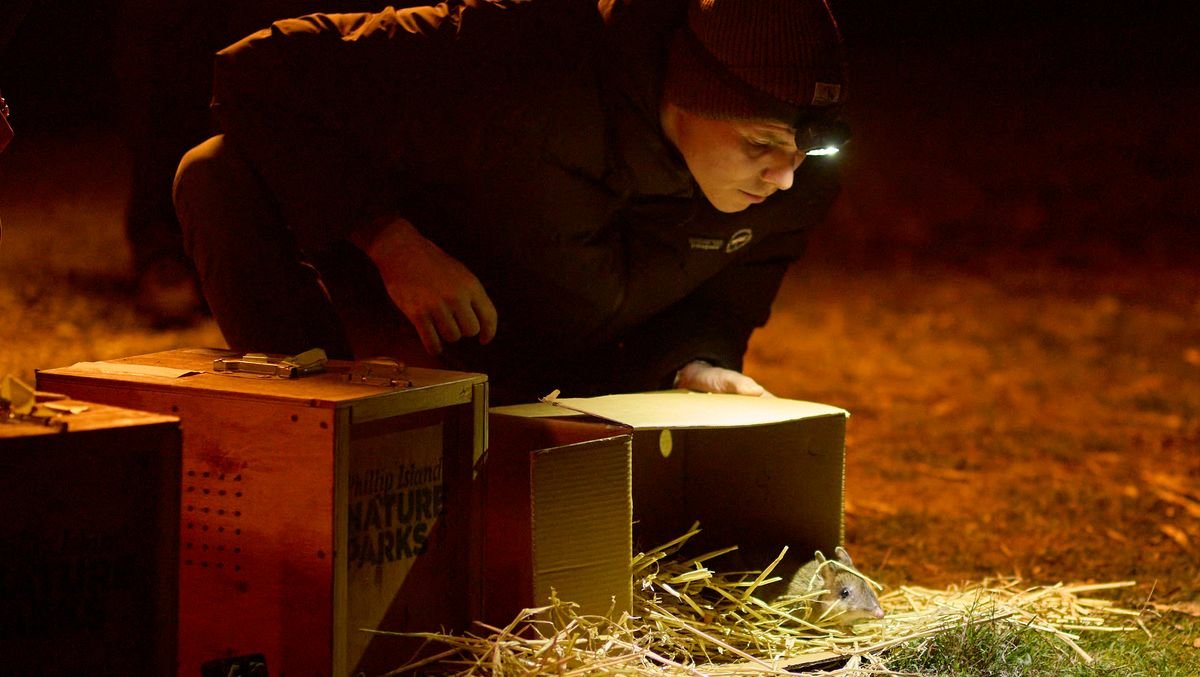

A formerly extinct marsupial species, the eastern barred bandicoot, has been reintroduced in Australia through a successful breeding program aimed at ensuring its survival. In 1991, the species was declared extinct in the wild when its population dwindled to just 60 individuals residing in a garbage dump in Victoria during the late 1980s.
Previous efforts to reintroduce the eastern barred bandicoot failed due to issues of inbreeding. However, a groundbreaking gene-mixing technique has now been utilized, involving the crossbreeding of mainland Australian bandicoots with those from Tasmania. These two populations had been genetically isolated from each other for over 10,000 years.
The conservation efforts to save the eastern barred bandicoot were supported by Amazon’s Right Now Climate Fund, underscoring the company’s dedication to climate innovation. Additionally, Amazon is actively involved in supporting various conservation projects in Australia, such as breeding programs, the maintenance of wildlife sanctuaries, animal translocations, and educational initiatives.
Michael Miller, Vice President of Amazon, highlighted the remarkable recovery of the bandicoots, emphasizing the scientific foundation of the genetic rescue program. He expressed optimism that similar methodologies could be applied globally to save endangered species.
The genetic rescue program was spearheaded by the Odonata Foundation, Cesar Australia, and the Eastern Barred Bandicoot Recovery Team. The burrowing activities of eastern barred bandicoots play a crucial role in enhancing soil health and fortifying landscapes against natural disasters. These bandicoots will be relocated to at least five different sites across Australia, aiming to establish a population of at least 500 individuals distributed geographically to mitigate the risk of population loss.
The Right Now Climate Fund contributed a AU$2.5 million (US$1.8 million) donation to aid in the restoration of endangered species populations in Australia. This three-year project targets the preservation of the eastern barred bandicoot, along with other species like the eastern quoll and southern brush-tailed rock-wallaby.
Dr. Andrew Weeks, the director of Cesar Australia and a science advisor to Odonata, emphasized the improved genetic health and survival prospects of the newly established bandicoot population compared to their inbred predecessors.