

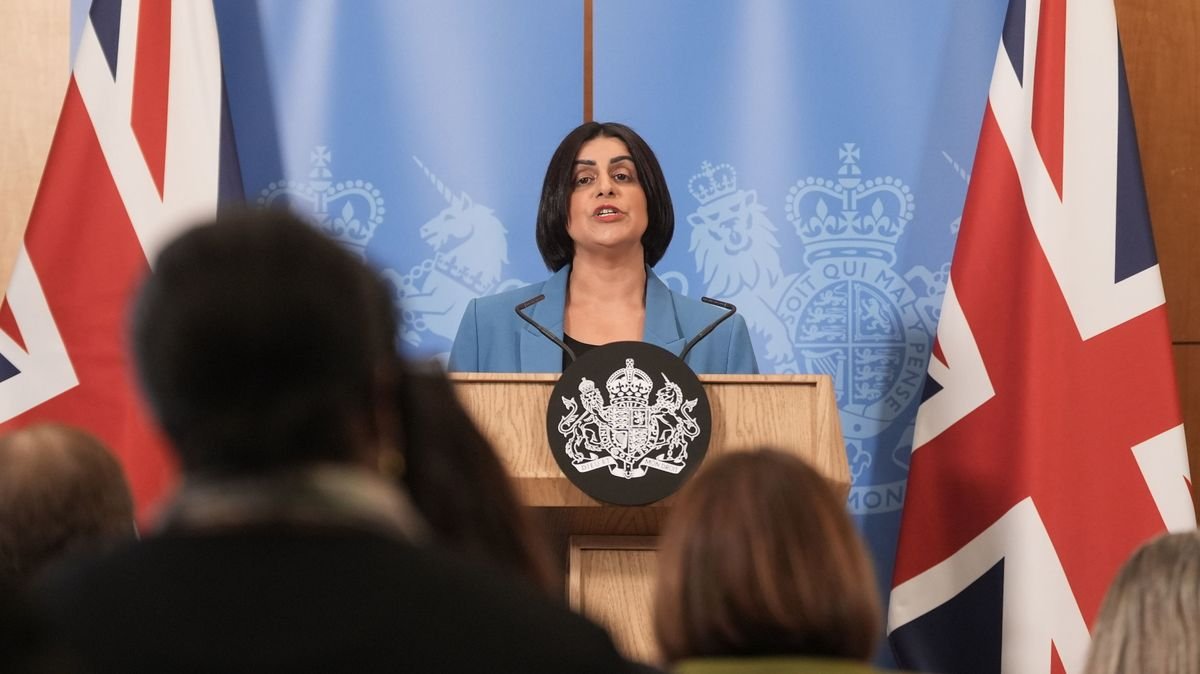

Three prominent children’s charities in the UK have urged Shabana Mahmood to reconsider her controversial immigration reform. Coram, Barnardo’s, and the Children’s Society have raised concerns over the potential impact of doubling the time required to qualify for indefinite leave to remain (ILR), citing research indicating that as many as 90,000 vulnerable children could face prolonged poverty due to these changes.
According to the charities, the proposed changes unfairly disrupt families’ decisions that are crucial for their children’s well-being. A study by the Institute for Public Policy Research (IPPR) revealed that over 300,000 children currently residing in the UK would be affected by the Home Secretary’s proposed settlement policies. The charities warn that up to 90,000 children could be pushed into poverty as a consequence of these alterations.
Currently, migrants can apply for ILR after five years in the UK. Mahmood intends to extend this requirement to 10 years, emphasizing the need to earn the right to settle in the country. Her plan includes provisions for accelerated settlement through community volunteering, with priority given to high-earning individuals and NHS personnel.
Conversely, individuals relying on benefits or entering the country unlawfully would face penalties, some potentially waiting up to 30 years for settlement. Migrant families would encounter restrictions on accessing benefits, and their children would not be considered ‘home’ students when applying for student finance, leading to higher tuition fees.
While the Home Secretary justifies the proposals as fair, the decision to apply them retroactively has sparked criticism. The charities stress in their letter that children come to the UK as children first, emphasizing the importance of ensuring that settlement and asylum reforms align with the government’s goals for the future generation.
The charities advocate for maintaining existing rules, such as granting ILR to seven-year-olds born in the UK. They also call for a five-year pathway for children who have resided in the UK for seven years and for 18 to 24-year-olds who have spent half their lives in the country.
Furthermore, they demand guarantees that infants and children are not subjected to force in the process. Dame Carol Homden, Chief Executive of Coram, underlines the necessity for settlement and asylum reforms to align with broader government objectives for children, including addressing child poverty and promoting equal opportunities.
The proposal to implement ILR changes retrospectively has drawn criticism from Labour MPs, with Angela Rayner condemning it as “un-British” and a breach of trust. Despite the backlash, recent polling indicates that 50% of the public supports Mahmood’s proposals, while 22% remain undecided.
The Home Office estimates that without intervention, 1.6 million individuals could gain permanent settlement by 2030, following a surge in net migration under the Conservative government. A Home Office spokesperson emphasized that while the country welcomes contributions from immigrants, the privilege of permanent residency should be earned rather than automatic.
The government plans to extend the settlement period from five to ten years, considering the significant influx of low-skilled migrants in recent years. Consultations are ongoing to potentially apply these changes to individuals currently in the UK without settled status, with responses under review for future action.