

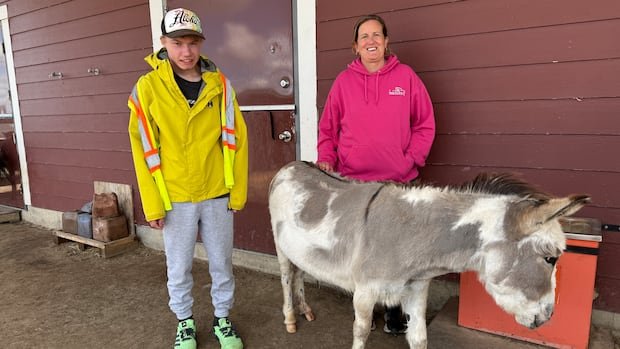

A vibrant farm situated along a gravel road in rural Saskatchewan is a hive of activity, featuring two houses, a red barn, a shop, a mess hall, and a greenhouse. On a warm August day, individuals with intellectual disabilities are engaged in gardening tasks. Women are seen harvesting beans, while a group of men diligently waters the corn and potato crops.
Lynne Cammidge, a 52-year-old resident, expresses her delight at Farm in the Dell, describing it as a serene place that captured her heart when she first arrived 15 years ago. She recounts how her move to this rural group home was prompted by her aging parents’ desire for her to find a suitable living arrangement. Comparing it to another group home in Saskatoon that didn’t meet her needs, Cammidge appreciates the beauty and peace found at Farm in the Dell.
Farm in the Dell, a non-profit organization, offers individuals with intellectual disabilities the opportunity for meaningful work and a countryside lifestyle. Nestled approximately 45 kilometers northeast of Saskatoon near Aberdeen, Sask., the farm provides a range of tasks such as weeding, watering, and general upkeep, allowing residents to take pride in caring for their living environment.
Managed by Shauna Dollansky, the Aberdeen site emphasizes that the residents, many of whom have rural backgrounds, seek a sense of purpose and connection to the land through their work. The establishment of the Aberdeen home in 2010 accommodates 17 clients across two houses, supported by about 40 staff members in various roles, with financial assistance from the Ministry of Social Services through Community Living Service Development.
Executive director Lynette Zacharias highlights the importance of community and familial bonds within the home, providing residents with a sense of belonging and engagement. The farm’s activities extend beyond the premises, with scheduled outings to local events and the active participation of residents in day programs.
The Farm in the Dell experience includes caring for various animals on the farm, tending to vegetable gardens, and collecting eggs from the chicken coops. Staff and residents collaborate on preparing meals using farm-fresh produce, fostering a sense of self-sufficiency and accomplishment.
Building on the success of the Aberdeen farm, a second group home in Biggar, Sask., was recently opened. Supported by the local community and situated on 100 acres of donated land, the Biggar home accommodates ten adults across two connected five-bedroom houses. The Farm in the Dell model is envisioned to expand to more communities, aiming to provide essential support to individuals and families in need.
With an annual budget of approximately $3 million from the Ministry of Social Services to operate both locations, Farm in the Dell continues to serve individuals with intellectual disabilities, contributing to their well-being and integration within the community. The Ministry highlights ongoing initiatives to construct new group homes, including specialized care facilities, to meet the diverse needs of individuals with intellectual disabilities.