

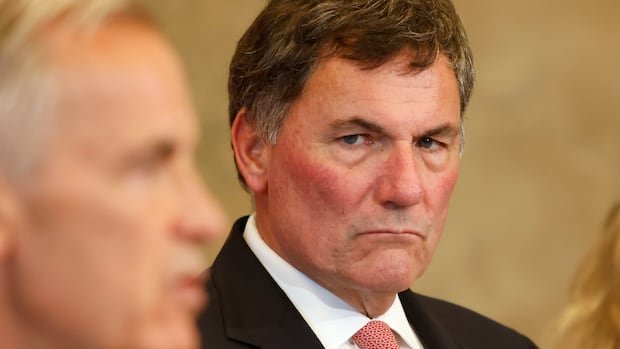

Canada’s Minister of Trade with the U.S., Dominic LeBlanc, expressed satisfaction with the United States retracting its stance on French language and culture issues. This change in position came after U.S. Trade Representative Jamieson Greer reassured Canada that its streaming regulations are not a non-negotiable point for the U.S. side.
LeBlanc stated that Canada appreciates the U.S. withdrawal of concerns regarding discoverability and labeling, ensuring that initiatives supporting French language and Canadian culture will not face future trade repercussions. He emphasized the importance of forthcoming clarifications from the U.S. to pave the way for a trade agreement that upholds Canadian sovereignty.
Following the introduction of demands on culture, automobiles, and sovereignty by the Trump administration, Prime Minister Mark Carney instructed negotiators to halt discussions. Carney revealed that the U.S. objected to Canada’s subsidies for French culture, the online presence of French-language media, and the requirement for bilingual product labels in Canada.
In a recent interview, U.S. Trade Representative Jamieson Greer adjusted the U.S. stance on cultural and linguistic matters. Greer acknowledged the significance of the French language in various Canadian regions and assured that these concerns were being handled delicately, without being a deal-breaker.
Despite the positive shift in discussions around language and culture, trade talks have stalled, with no immediate plans for both parties to resume negotiations. The U.S. imposed tariffs on Canadian goods following the breakdown in talks, prompting Canada to announce counter-tariffs on a range of American imports.
U.S. Commerce Secretary Howard Lutnick accused Carney of using political tactics by walking away from negotiations. Lutnick disputed claims that language laws were a key issue, suggesting it was a strategy to influence the upcoming Quebec election. This led to a debate between political leaders regarding the truthfulness of the negotiations’ narrative.
The evolving dynamics in trade discussions between Canada and the U.S. highlight the complexities surrounding cultural and linguistic considerations, underscoring the challenges in reaching a mutually beneficial trade agreement.