

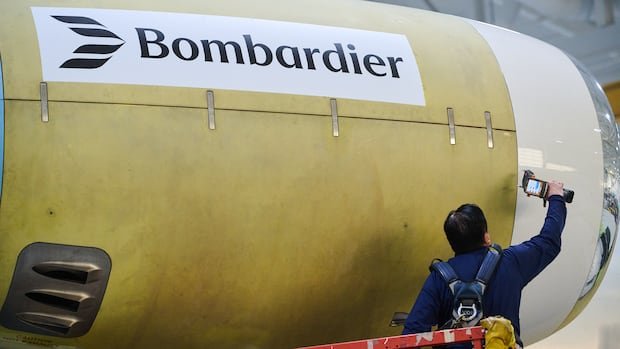

U.S. President Donald Trump has stepped back from his previous stance to prohibit Bombardier aircraft sales in the United States, easing tensions in the aerospace industry following recent trade war escalations.
During a campaign rally on Monday, Trump expressed a shift in his perception of the Montreal-based business jet manufacturer, acknowledging its presence beyond Canada. He assured the audience in a Kansas suburb that he intends to assist the company and preserve jobs, especially for the 1,500 employees at Bombardier’s facility in Wichita.
Wichita, where Bombardier’s defense division is located, houses around 3,500 American workers across various states, including Kansas, Texas, and California.
The president’s decision came after a phone call from Kansas Senator Roger Marshall, a Republican, who is in a tight race against Democratic candidate Adam Hamilton for control of the state in the upcoming midterm elections.
Trump’s earlier social media post threatening to block Bombardier’s U.S. sales unless it shifted manufacturing operations to the country had sparked concerns about potential impacts on American workers. However, Bombardier highlighted its significant contributions to the U.S. economy, emphasizing its partnerships with numerous American suppliers and the creation of high-skilled jobs through recent investments.
Despite the ongoing trade tensions, Bombardier’s commitment to the U.S. market remains steadfast, with the company continuing to support American aerospace and defense industries. The company’s shares saw a positive response in the market following the resolution of regulatory uncertainties, indicating investor confidence in the aerospace manufacturer’s future outlook.
While Trump’s rhetoric has at times targeted Bombardier, the company plays a vital role in the North American aerospace sector, with a substantial portion of its products featuring U.S. components. Any restrictions on Bombardier’s operations could have led to adverse consequences for American suppliers and operators awaiting aircraft deliveries.
The president’s reversal on the Bombardier issue coincided with Ottawa’s retaliatory tariffs on American goods, showcasing the complex trade dynamics between the U.S. and Canada. This episode marked another instance of trade tensions between the two countries, underscoring the challenges of navigating international economic relationships.