

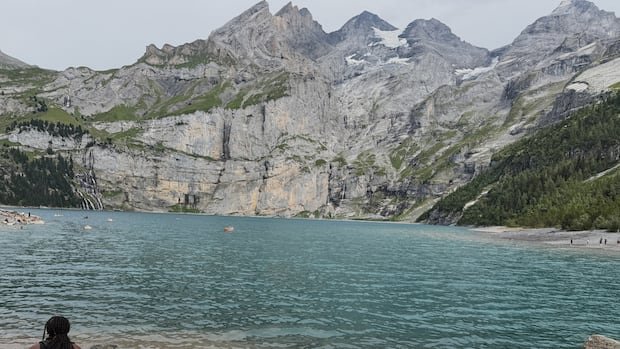

Glaciers in Switzerland, known for hosting the highest number in the Alps, have experienced a 5.5% decline in ice volume this year. This decrease marks the second-largest percentage drop on record, attributed to heat waves and reduced winter snowfall, as detailed by experts. The GLAMOS Swiss glacier monitoring service and Swiss Academy of Sciences emphasized the dire situation, stating that under these circumstances, Alpine glaciers face a bleak future in the long run.
The concerning trend of ice loss in Switzerland has intensified in recent years. Over the past five years alone, the country has witnessed a nearly 20% reduction in ice volume, highlighting the rapid pace of glacier retreat. These developments underscore the growing impact of global warming, particularly in Europe, which is recognized as the continent experiencing the most rapid increase in temperatures worldwide.
Matthias Huss, leading GLAMOS, highlighted the critical role of winter snowfall in glacier preservation. He explained that snow serves as a protective layer, preventing ice from melting, and also contributes to the formation of new ice. Therefore, the scarcity of snow exacerbates the vulnerability of glaciers to melting, as witnessed in the notable retreat of glacier ice in 2022, when a combination of factors such as high temperatures, minimal snow cover, and dust deposition from the Sahara accelerated ice loss.
Beyond Switzerland, the effects of global warming have been felt across diverse regions, including the Himalayas, Greenland, and Antarctica. These areas have experienced significant glacier shrinkage, leading to environmental challenges and hazards like flooding. In Switzerland specifically, although the absolute volume loss is less than that recorded in 2003, the percentage decline this year is more substantial due to the overall reduction in ice volume over the years.
The accelerated ice melt in Switzerland has far-reaching consequences, with the country losing an estimated 2.2 trillion liters of water between July and September, equivalent to four times its annual water consumption. As a key water source for Europe, Switzerland’s glacier retreat impacts vital rivers like the Danube, Po, Rhine, and Rhone, emphasizing the broader implications of glacier loss on water resources and energy production.
Experts have observed extensive melting across various Swiss glaciers this year, with glaciers like Allalin, Clarident, Rhone, and Aletsch experiencing unprecedented ice loss. While efforts to stabilize the climate and reduce CO2 emissions are crucial for glacier preservation, Huss acknowledged the urgency of the situation, expressing concerns that it may be too late to save the Swiss Alps glaciers. Nonetheless, he emphasized the importance of addressing climate change to mitigate the impacts on polar ice sheets and ultimately limit sea level rise, which poses a significant threat to coastal communities worldwide.