

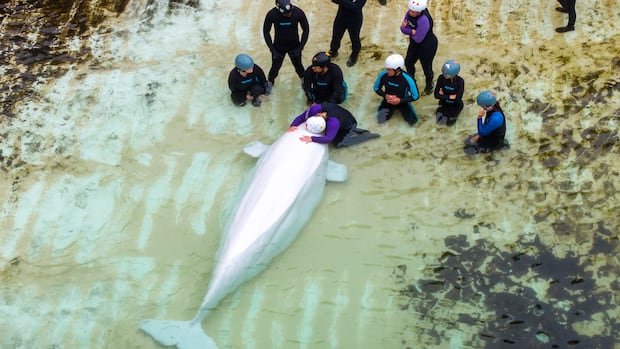

Marineland completed the relocation of its remaining captive whales and dolphins to five different locations over the summer following the Canadian government’s 2019 ban on keeping captive whales. The transfer involved 30 belugas and four dolphins, making it the largest animal transfer operation globally.
Unfortunately, five of the transferred animals have passed away, with the most recent death occurring on September 24 at the Oceanogràfic de València in Spain. One of the deceased was Echo, a blind Black Sea bottlenose dolphin sent from Niagara Falls to Spain, who arrived with severe health issues requiring specialized care.
The stress of transportation has been highlighted by marine mammal experts, underscoring its impact on the well-being of belugas. The physiological stress induced by psychological distress can lead to issues like suppressed appetite, as explained by Valeria Vergara, a senior scientist at the Raincoast Conservation Foundation.
Recent deaths of belugas and dolphins in Spain and Chicago have raised concerns, with investigations ongoing to determine the causes. While some animals are showing signs of adjustment and stability in their new environments, challenges persist in ensuring their health and well-being post-relocation.
Various facilities, including SeaWorld and the Georgia Aquarium, are closely monitoring the relocated belugas’ health and behavior. Despite efforts to provide care and support, challenges such as appetite changes and weight fluctuations have been observed in some animals.
Experts emphasize the profound stress and challenges faced by belugas during transport and captivity, highlighting the need for ethical considerations in managing these animals. The impact of such transfers and long-term captivity on marine mammals’ health and behavior remains a subject of ongoing research and concern.
The relocation of captive belugas and dolphins from Marineland has sparked debates around animal welfare, with advocates urging for more stringent regulations and ethical considerations in such operations. The impact of these relocations on the animals’ health and survival continues to be a matter of scrutiny and discussion within the marine conservation community.