

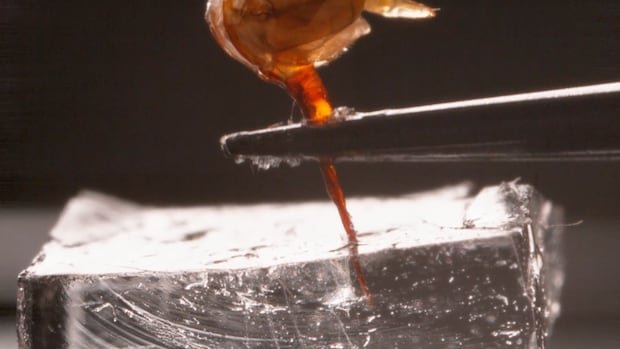

A western honey bee’s stinger, belonging to the species Apis mellifera, serves as a final line of defense, designed to puncture and inject venom into the target, often leading to the bee’s demise. Recent findings presented in the Proceedings of the National Academy of Sciences shed new light on the effectiveness of this defensive tool.
Fiorella Ramirez Esquivel, a postdoctoral researcher at Macquarie University in Australia, highlighted the significance of being able to capture the stinger in action through modern high-speed cameras. By filming the rapid stinging process, the research team was able to analyze the intricate mechanics involved.
Utilizing advanced cameras capable of recording hundreds of frames per second, Ramirez Esquivel and her colleagues observed the translucent nature of the venom sac and stinger, allowing for detailed visualization of the internal structures during the stinging process.
Through experiments involving live honey bees, the researchers removed the stingers and promptly terminated the bees due to the limited two-minute window of stinger viability post-separation. This time constraint necessitated swift and precise actions during the experimental setup.
The study revealed a unique “double piston design” in the bee’s stinger, where specialized valves facilitate both the penetration of the stinger and the continuous delivery of venom into the target. This intricate mechanism, resembling a complex engine, involves precise movements of the valves to ensure uninterrupted venom flow.
Juliana Rangel, an apiculture professor at Texas A&M University, expressed fascination with the detailed insights provided by the research, surpassing traditional microscopic images. The study also highlighted the prolonged activity of the stinger, with twitches and movements persisting for up to 15 minutes after deployment.
The defensive strategy of the western honey bee, involving autotomy where part of the body is sacrificed for protection, reflects the collective nature of their colonies. The stinging mechanism serves as an evolutionary insurance policy to safeguard the larger community, emphasizing the selfless sacrifice of the individual worker bees.
Notably, the study underscores the intricate nature of bee behavior and physiology, offering potential insights for medical applications. The continuous flow of venom facilitated by the stinger’s dual piston system presents a unique biological mechanism that could inspire novel scientific developments.
The research not only provides a deeper understanding of the western honey bee’s stinging apparatus but also prompts exploration into the evolutionary adaptations of other honey-producing bees, raising intriguing questions about the diversity of defensive strategies among bee species worldwide.