

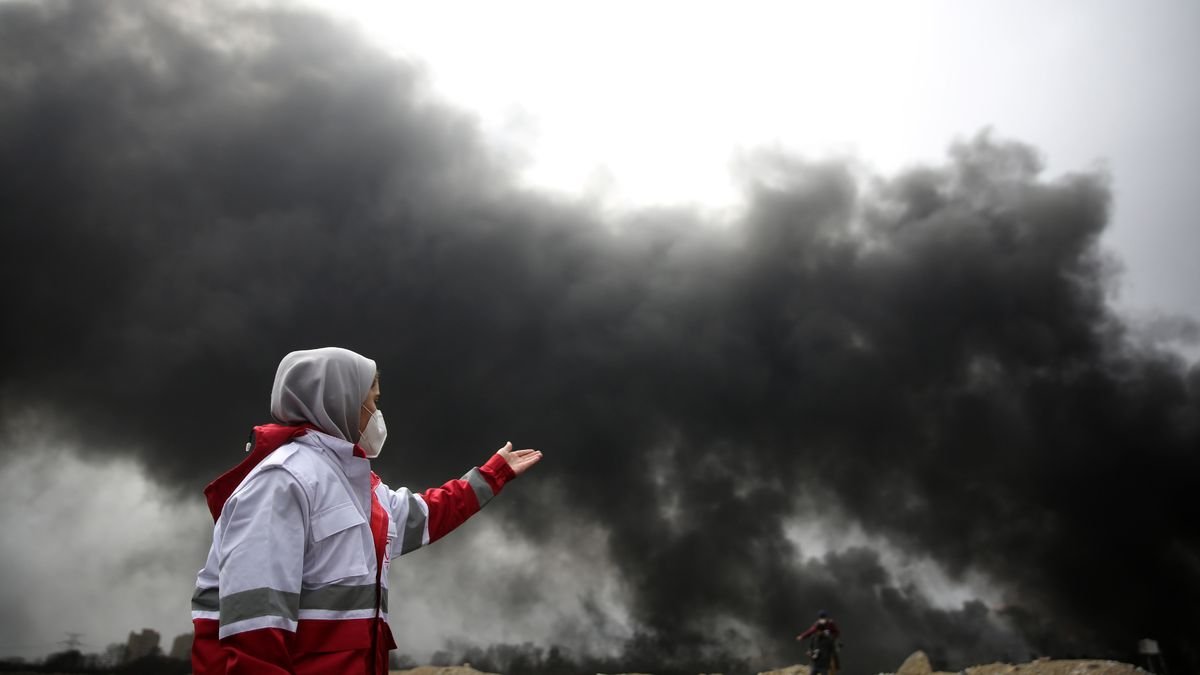

Blackened structures, vehicles, and streets covered in soot, thick and oily rain clouds, and hazardous air quality causing respiratory issues and discomfort—these were the alarming sights faced by residents of Tehran and its neighboring areas recently.
Following US-Israeli airstrikes on Iran’s oil facilities, massive amounts of toxic smoke were unleashed into the atmosphere. This toxic smoke eventually descended back to the ground as dangerous ‘black rain’, prompting global health organizations like the World Health Organization (WHO) to caution the public about the associated health risks.
The Israeli Defense Forces (IDF) acknowledged targeting fuel storage sites in Tehran, suspecting their use by the Iranian military for operational purposes. Subsequently, residents of Tehran experienced breathing difficulties and eye irritation due to the fallout of oily black rain resulting from the strikes on oil refineries and fuel depots.
These events coincided with a warning issued by US President Donald Trump on Truth Social, indicating severe actions against Iran. The ongoing conflict between Iran, the United States, and Israel has triggered severe environmental consequences, including black rain episodes, not only endangering Iranians but potentially other regions as well.
Experts are urgently advising individuals exposed to black rain about the immediate and long-term health hazards it poses. The continuous airstrikes on Iran’s oil facilities have led to severe air pollution in Tehran and its surroundings, impacting millions of residents.
The formation of ‘black rain’ is a result of pollutants merging with rainwater, causing a darkened appearance. Unlike typical rain that cleanses the atmosphere, black rain occurs when pollutants like soot and toxic substances combine with water droplets and descend without being purified.
The aftermath of the airstrikes raised concerns about the unprecedented pollution levels and health risks posed by the toxic rain in Tehran. The microscopic particles from the fallout can penetrate deep into the respiratory system and bloodstream, potentially causing fatal health issues, including respiratory, cardiovascular problems, and increased cancer risks.
Health authorities, including the WHO, have warned about the dangers of contaminated rainwater, emphasizing the risks it poses to vulnerable populations. Experts underscore the immediate and long-lasting effects of such environmental disasters on public health, emphasizing the critical need for mitigation strategies.
Regardless of the conflict’s outcome, the devastating impact of war on civilian populations remains a stark reality that demands attention and intervention.