

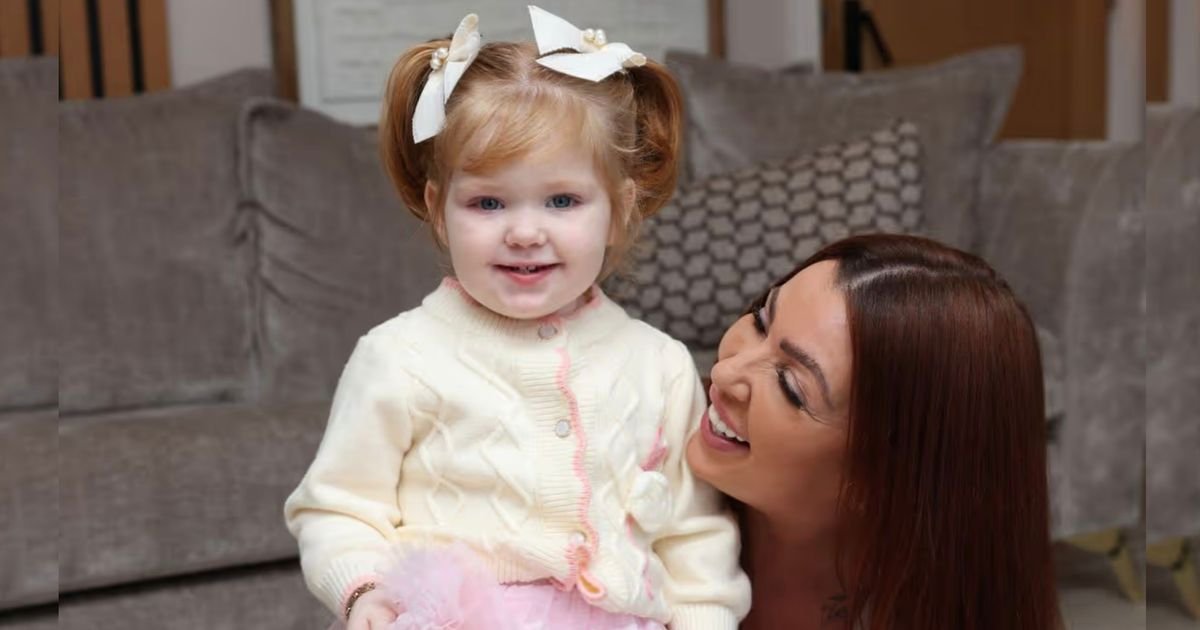

A 2-year-old girl narrowly escaped death after a hospital mistakenly diagnosed her meningitis as a stomach bug. Haisleigh Finlay, now 2 years old, was discharged from the emergency room with a misdiagnosis of a stomach bug when she was actually fighting a severe infection known as meningococcal sepsis, caused by the same bacteria as meningitis. Haisleigh exhibited symptoms such as vomiting, shivering, and cold, mottled feet.
Her mother, Kayleigh, rushed her to Queen Elizabeth Hospital but was initially sent home with the belief that she had a stomach bug. When Haisleigh’s condition did not improve and seemed to deteriorate, Kayleigh called for an ambulance.
Although hospital officials refrained from commenting on individual cases, they expressed regret for the family’s ordeal, as reported by Chronicle Live. An internal inquiry into the incident is nearing completion, the hospital disclosed.
Kayleigh expressed concern that as a first-time mother, she might not have had the confidence to challenge the healthcare professionals who assured her it was only a bug. She trusted her instincts, and upon Haisleigh’s readmittance to the hospital, it became evident that her situation was critical.
Recalling the incident from June 6 last year, Kayleigh stated that Haisleigh initially displayed symptoms of vomiting, shivering, and cold mottled feet. Despite her attempts to manage Haisleigh’s temperature with medication, the hospital staff managed to lower her temperature once, leading them to diagnose it as a stomach bug.
Upon their return to the hospital, they were informed that Haisleigh had a mere 40 minutes to live. Kayleigh emphasized the importance of raising awareness and asserted that hospitals must heed parents’ concerns.
Kayleigh now advocates for parents to trust their instincts and advocate for their children. She emphasized the consequences of not seeking further medical attention, emphasizing that if she had followed the initial advice, the outcome could have been fatal. The delay resulted in a stroke and brain damage for Haisleigh, which could have been prevented had her concerns been taken seriously.
Following their return to the hospital, Haisleigh received improved care and was promptly transferred to the RVI in Newcastle. Subsequently, she was transferred to the Freeman Hospital and placed on an ECMO device, a life support system for individuals in heart or lung failure. Unfortunately, Haisleigh suffered a stroke during this period, and while her recovery has been positive, the long-term impact on her brain remains uncertain.
The family spent four weeks in the hospital, a period that could have extended to six months if not for Haisleigh’s progress. Kayleigh highlighted the necessity of conducting tests promptly, emphasizing that timely intervention can save lives. She stressed the critical nature of acting swiftly, citing Haisleigh’s narrow survival margin and the importance of receiving timely medical attention.
A spokesperson from Gateshead Health NHS Trust, responsible for operating QE Hospital, expressed sympathy for Haisleigh and her family as she recuperates from a severe illness. The Trust conveyed regret for the distress experienced by the family and disclosed ongoing efforts in the final stages of an internal investigation.
The Trust committed to direct communication with the family, sharing their findings, lessons learned, and subsequent actions taken. Emphasizing a dedication to upholding the highest standards of patient care, the Trust reiterated its commitment to continuous improvement based on insights gained from each case to enhance services for patients and the community.