

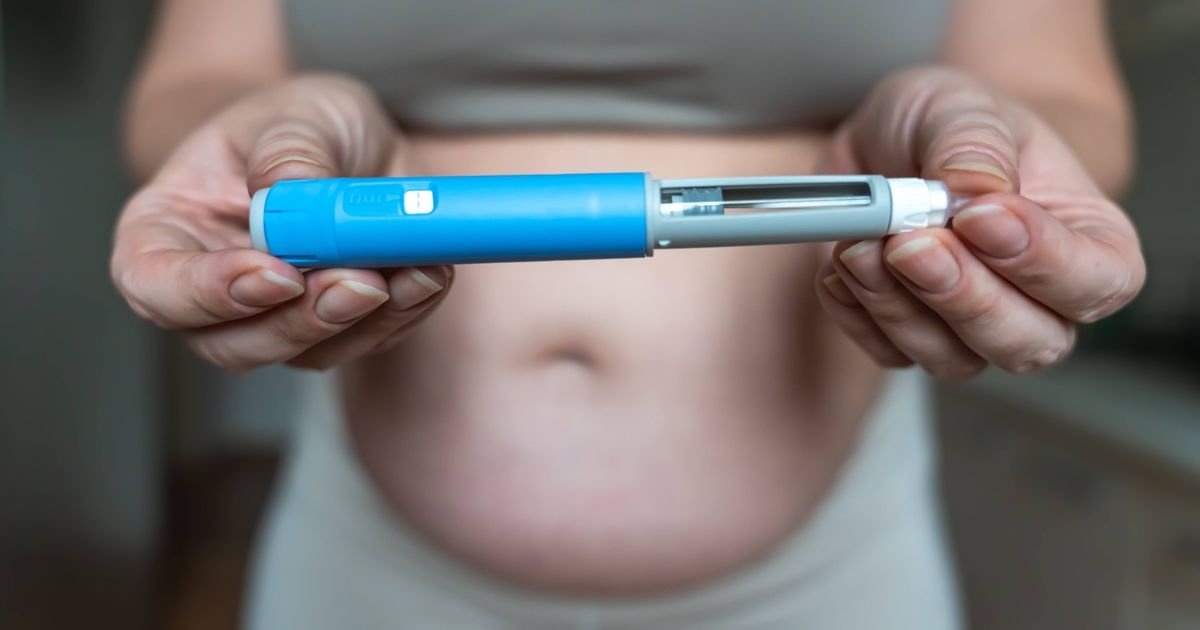

A recent study suggests that individuals who discontinue obesity injections like Mounjaro or Wegovy may regain nearly two-thirds of the weight they had lost within a year. However, the weight regain process seems to stabilize over time, allowing patients to maintain around a quarter of their initial weight loss.
Researchers have warned that if the regained weight consists mainly of fat, individuals may end up in a worse state than before starting the injections. These weight loss injections, classified as GLP-1 receptor agonists, mimic the GLP-1 hormone to regulate blood sugar and insulin levels.
Originally designed for treating type 2 diabetes, certain variants such as semaglutide (Wegovy) and Mounjaro (tirzepatide) are now approved for combating obesity within the NHS. The study, conducted by University of Cambridge scientists, analyzed six trials involving over 3,200 participants.
The findings, published in eClinicalMedicine, reveal that after discontinuing the injections for 52 weeks, individuals typically regained 60% of the lost weight. The researchers noted a significant weight regain trend after stopping GLP-1 receptor agonists.
However, by the 60-week mark, the regain rate began to slow down, with individuals maintaining 75% of their initial weight loss, indicating a potential long-term sustainability of 25%.
Brajan Budini, a medical student at the University of Cambridge, explained that drugs like Ozempic and Wegovy act as appetite suppressants, leading to reduced food intake and subsequent weight loss. When individuals stop taking these medications, their appetite regulation may be disrupted, potentially causing rapid weight regain.
He emphasized that while most of the lost weight may be regained, some weight loss is usually maintained. However, the proportion of lean mass recovery remains uncertain, which could affect individuals’ health if the regained weight is primarily fat.
Researchers have called for further studies to investigate the effects of GLP-1 receptor agonists on body composition during and after treatment. They highlighted the inconsistency and inadequacy of current prescribing guidelines in addressing the risk of weight regain post-treatment cessation.
For instance, the National Institute for Health and Care Excellence recommends a maximum two-year treatment duration with semaglutide for weight management, unlike tirzepatide, which lacks such restrictions.
Steven Luo, another medical student at the University of Cambridge, advised healthcare providers and patients to be aware of the potential for weight regain when discontinuing weight loss drugs. He suggested incorporating dietary improvements and exercise into the overall weight management plan to help individuals maintain healthy habits after ceasing medication use.