

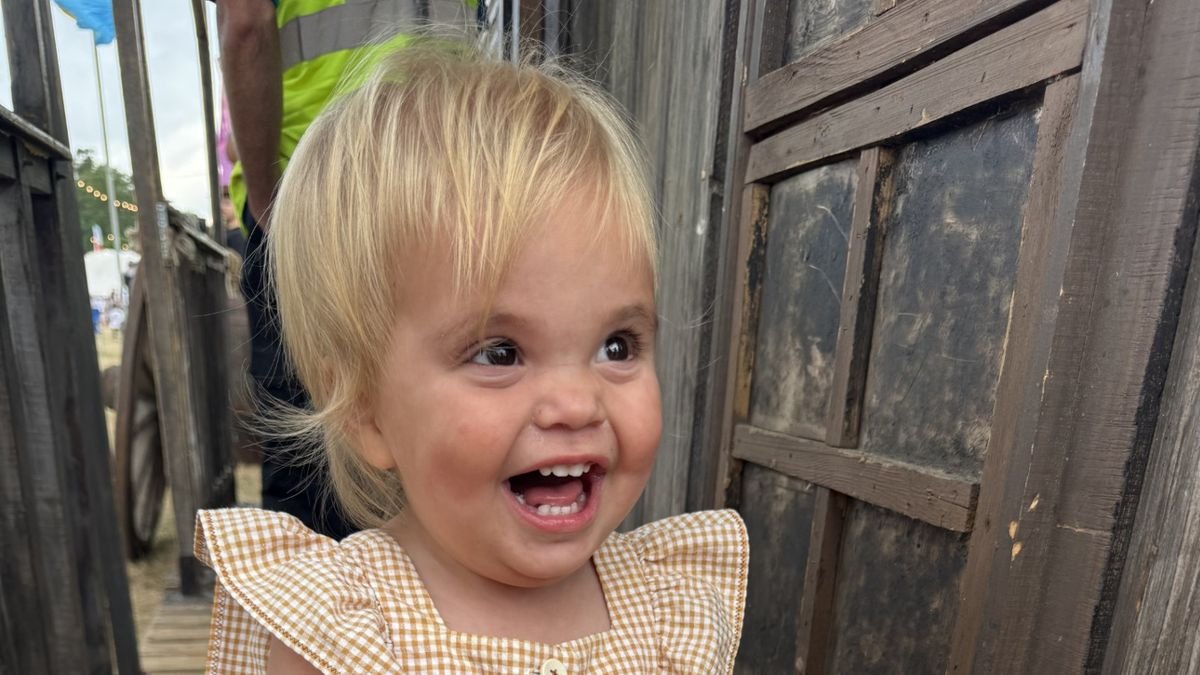

The parents of a two-year-old girl who has been diagnosed with childhood dementia are urgently seeking solutions as they advocate for increased funding toward addressing this rare condition.
Gus and Emily Forrester received the distressing news five months ago that their daughter, Leni, is suffering from a rare genetic neurodegenerative disorder called Sanfilippo disease.
The family is running out of time to explore treatment options for this terminal illness, which unfortunately has no cure and typically reduces life expectancy to the teenage years or early 20s.
Despite outward appearances of being a cheerful and typical little girl, Leni’s parents are acutely aware that each developmental milestone she achieves becomes increasingly bittersweet as they anticipate the gradual loss of her physical and cognitive functions in the years ahead.
In an exclusive interview with ITV News, Emily and Gus described their current situation as a devastating reality that shatters all parental hopes and dreams for their child’s future.
Sanfilippo disease results from an enzyme deficiency that prevents the breakdown of harmful molecules in the body, leading to progressive brain damage as the individual ages.
While initial signs of normal development may be observed in affected children, around the age of three, irreversible damage starts to manifest. Eventually, those impacted will lose their ability to walk, talk, eat, and drink, necessitating constant care.
As of now, there is no cure or approved treatment available in the UK for Sanfilippo disease. Emily emphasized the urgency of addressing the toxic buildup in Leni’s body daily in the absence of treatment.
The family is pinning their hopes on a forthcoming clinical trial in the US for a new therapy targeting the disease. They are urging the UK government to contribute to the funding of this research so that British children like Leni can participate.
Professor Brian Badger of the University of Edinburgh has developed a promising therapy involving the introduction of a missing gene into the patient’s blood stem cells, but initiating a clinical trial requires substantial financial support, underscoring the necessity of government backing.
Time is of the essence, as emphasized by Professor Badger, who warned that once brain cells start to deteriorate, the damage is irreversible. He stressed the importance of government involvement in advancing such potentially transformative treatments for affected children.
Leni’s parents are also advocating for broader newborn screening to detect various rare genetic conditions like Sanfilippo disease and are urging increased government investment in research for treatments.
For Gus, the fight for his daughter’s future seems unjust, while Emily expressed frustration at having to battle for their child’s life when effective solutions exist but remain out of reach.
The Department of Health and Social Care assured ITV News of their commitment to supporting individuals with rare conditions like Sanfilippo syndrome through expedited diagnoses, enhanced access to specialized care, and ongoing efforts to enhance understanding and treatment options.
The complete coverage of this story will be broadcast on ITVX and ITV Evening News on Monday, March 23rd.