

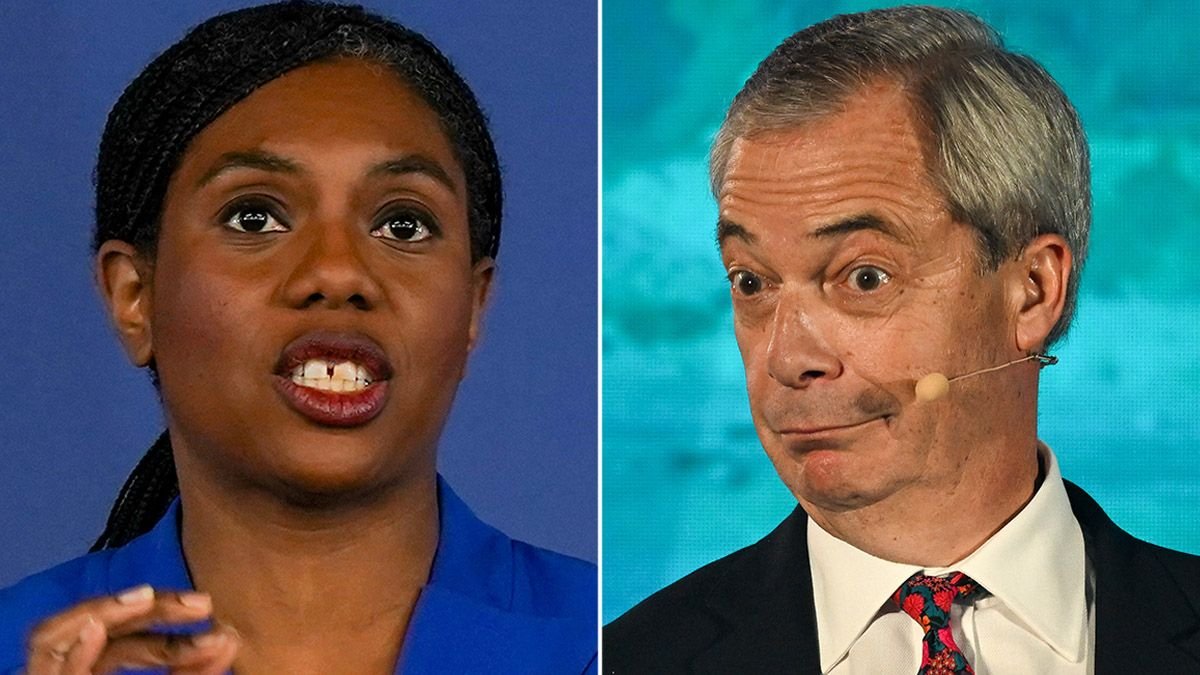

Had Nigel Farage or Kemi Badenoch been in charge as Prime Minister during the recent US and Israel military actions against Iran, Britain would likely have been on the brink of a war by now.
Keir Starmer has used this scenario to question the consistency of opposition leaders regarding the conflict in the Middle East.
Following the commencement of US-Israeli strikes, Kemi Badenoch strongly criticized the Prime Minister for hesitating to act, while senior Reform figures supported British participation. However, both the Tories and Reform parties now seem to be retracting their initial positions.
The Conservatives’ unclear stance became evident during a tense briefing after Prime Minister’s Questions on Wednesday, where Kemi Badenoch’s spokesperson repeatedly stated, “we are in the war,” when pressed on whether the party advocated for British involvement. Meanwhile, Nigel Farage made a sudden reversal on Tuesday, stating to reporters: “Let’s not get involved in another foreign war.”
This change of direction has exposed both parties to criticism for being indecisive and behaving like “armchair generals.” It has also provided an opportunity for Labour to highlight the weaknesses in Reform’s foreign policy and Ms. Badenoch’s aggressive position.
A joint letter, signed by over a dozen MPs with military backgrounds, including former Royal Marine and Labour MP Alex Ballinger, has been seen by The Mirror. The letter calls on Ms. Badenoch to apologize for her remarks suggesting that RAF personnel are simply idling in the Middle East. This letter follows Keir Starmer’s strong rebuke of the Tory leader during PMQs for her inconsistent stance on the conflict.
The MPs in the letter, criticizing the Tory leader for implying that British forces are not sufficiently engaged in the region, include Labour MPs Calvin Bailey, Helena Dollimore, and Bayo Alaba, as well as eight Liberal Democrat MPs.
Labour MPs and officials have taken advantage of the eagerness of both Reform and the Tories to involve Britain in the conflict. A source from the Ministry of Defence remarked that these individuals have lost credibility on national security, portraying them as unreliable leaders who change positions hastily. The source emphasized the importance of trustworthy leadership in matters of national security.
Regarding the response to the US-Israeli strikes, Keir Starmer has signaled that Britain will prioritize its own interests over blind alignment with the US President. This stance underscores the importance of making decisions based on what is best for the country.
One Labour MP criticized the initial positions of Reform and the Tories, highlighting the need for thoughtful deliberation before risking lives in conflicts. The MP emphasized the seriousness of military engagements and questioned the rationale behind hasty decisions that put British personnel in harm’s way.
While the Government’s handling of the situation has received some praise, with PM showing strong leadership in a challenging time, Reform and the Tories have been perceived as unserious in their approach.
Another MP commended Keir Starmer’s response but cautioned that circumstances could change rapidly, especially if British personnel or civilians are harmed in the conflict zone.
Public sentiment has turned against the US military action, with opposition to the strikes increasing by 10% since the conflict began, now standing at 59%.
The surge in oil and gas prices due to the conflict has raised concerns about the economic impact on households and businesses. With over half of Britons citing the cost of living as a top concern, right-wing parties have likely been alarmed by the potential economic repercussions.
Nigel Farage’s controversial positions, including his stance on the Ukraine war, have drawn scrutiny. His reluctance to support British military involvement and his previous remarks regarding Russia’s actions in Ukraine have not resonated well with the public.
Uma Kumaran, a member of the Foreign Affairs Committee, criticized Farage and Badenoch for their initial push for military action without considering public sentiment. She highlighted their inconsistency and urged the public not to forget their past controversial statements.
Labour is capitalizing on the vulnerabilities exposed by Reform and the Tories in their foreign policy decisions. A Labour source emphasized the importance of steady leadership and contrasted Keir Starmer’s approach with what was perceived as opportunism from other parties.
The decision to commit British troops to war is considered one of the most significant responsibilities of a Prime Minister, and Labour remains vigilant in holding leaders accountable for their actions.
</