

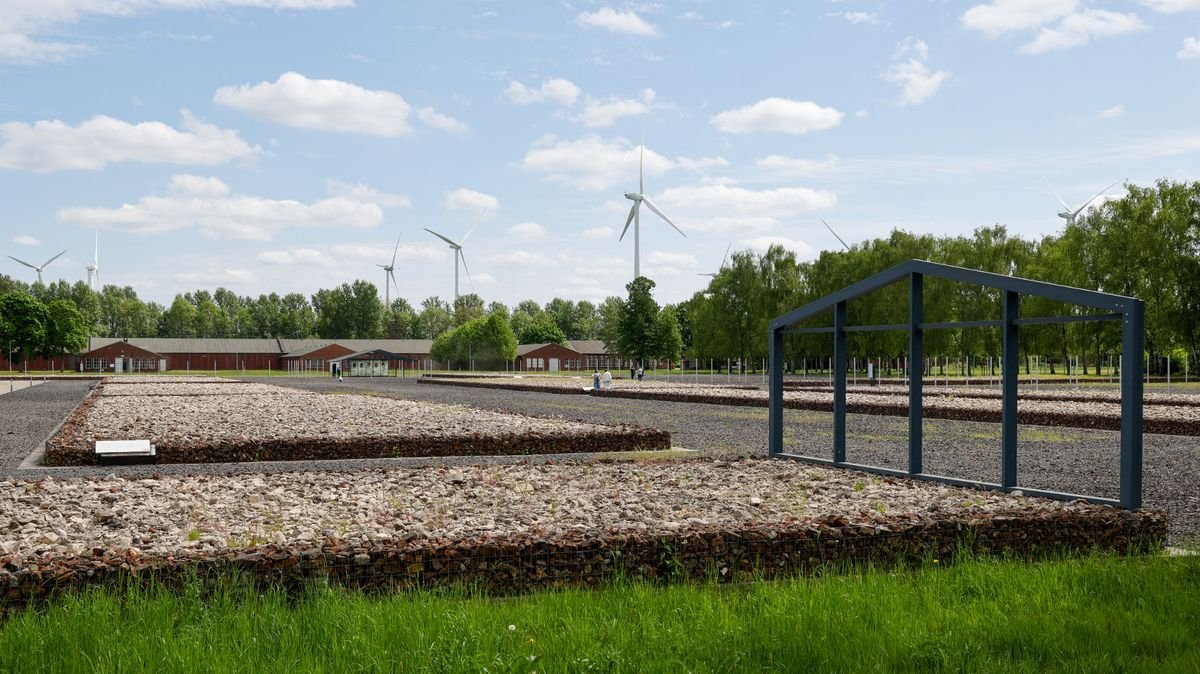

Former Nazi concentration camp sites in Germany, now serving as Holocaust memorials, are facing heightened safety concerns prompting the installation of emergency panic buttons for staff. Reports indicate that employees, including guides and reception workers, are feeling threatened by escalating levels of abuse and intimidation from right-wing extremists, leading to the demand for increased security measures. Oliver von Wrochem, the director of the Neuengamme concentration camp near Hamburg, acknowledged the alarming situation and emphasized the need for improved education on the Holocaust for young people.
Emergency buttons have been installed at the Hamburg memorial site to enable quick police response, as staff members continue to express the necessity for enhanced security measures. Von Wrochem, who also chairs the Hamburg Foundation for Memorials and Learning Sites, highlighted the challenges of countering extremist ideologies solely through school visits and emphasized the ongoing threat posed by far-right parties and antisemitic beliefs.
The Neuengamme memorial site, situated on the grounds of a significant Nazi camp complex in northern Germany, witnessed the passage of over 100,000 prisoners between 1938 and 1945, including Jews from various European regions, political detainees, Soviet prisoners of war, and resistance fighters. Historians estimate that approximately 42,900 individuals perished due to executions, malnutrition, diseases, forced labor, and harsh camp conditions. Today, the former camp operates as a memorial and educational center, attracting numerous school groups annually.
Recent outrage erupted in Germany after swastikas were found painted on the gravestone of Helmut Schmidt, a respected former Chancellor of West Germany known for his stance against Nazi ideologies. The desecration of Schmidt’s grave, alongside that of his wife Loki, at the Ohlsdorf Cemetery in Hamburg sparked investigations by local authorities, with similarities to a prior incident in December 2023. Law enforcement covered the offensive symbols and conducted forensic examinations at the site to address the issue.
In efforts to combat rising far-right extremism and safeguard historical sites, the importance of continuous education and vigilance against hate-driven actions remains paramount in Germany’s ongoing battle against extremist ideologies.