

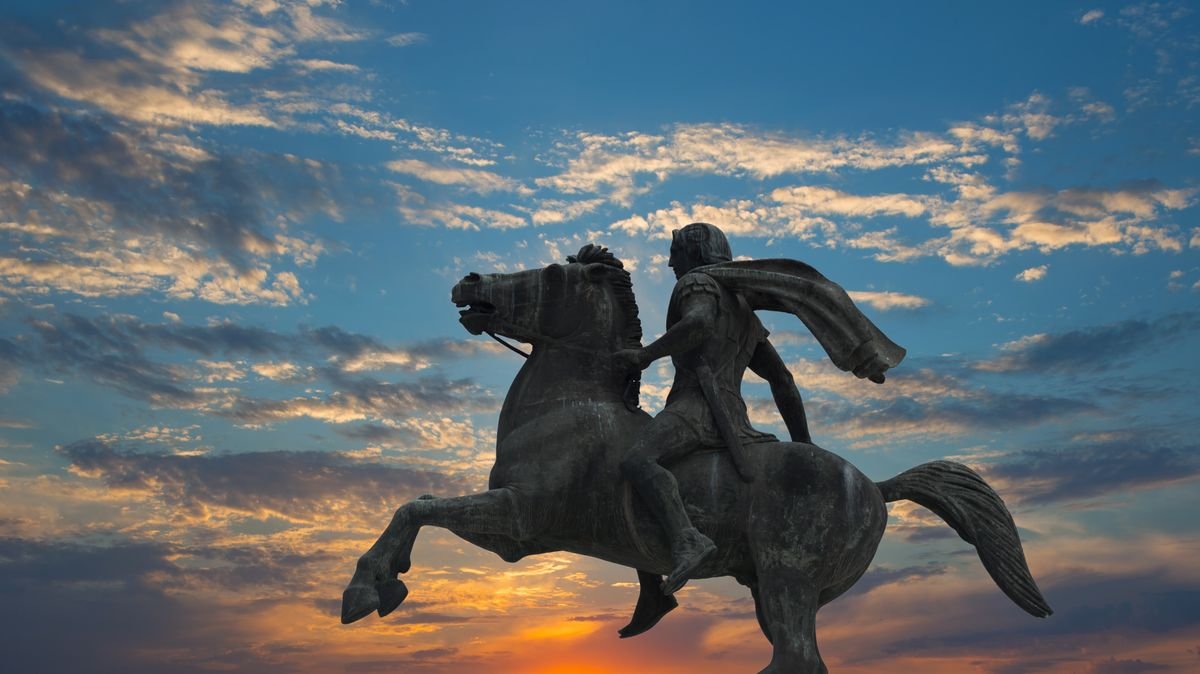

Archaeologists have identified the location of a city established by Alexander the Great, which served as a thriving port connecting ancient Mesopotamia to the trade routes of the Persian Gulf. Known as ‘Alexandria on the Tigris’, the city is situated in southern Iraq near the Gulf. Founded in the fourth century BC, it was part of a series of ‘Alexandrias’ established by Alexander as he expanded his empire from Greece to India.
While Egypt’s Alexandria gained global fame for its lighthouse and library, Alexandria on the Tigris remained elusive until recently. Researchers have confirmed that the city’s strategic location facilitated trade between the Tigris River and maritime routes across the Gulf and beyond, making it a vital hub for the exchange of goods, ideas, and people in ancient Mesopotamia and beyond.
Over time, the shifting course of the Tigris River and the accumulation of silt gradually buried the city’s remnants. However, through high-resolution geophysical scans and drone imagery, archaeologists have uncovered fortification walls, street layouts, industrial areas, and temple complexes. The discovery also includes traces of a harbor-and-canal system, providing a rare insight into an ancient metropolis frozen in time.
Stefan R. Hauser, an archaeology professor at the University of Konstanz, described the evidence found as “absolutely stunning,” noting the well-preserved building walls just below the surface. The city’s footprint spans approximately 2.5 square miles (about 6.5km²), comparable to or even exceeding some major capitals of its era.
Excavations at the site began in the 2010s led by British archaeologists, Jane Moon, Robert Killick, and Stuart Campbell. Despite facing challenges such as periods of conflict and extremist control, the team persevered in uncovering the long-lost city’s secrets.