

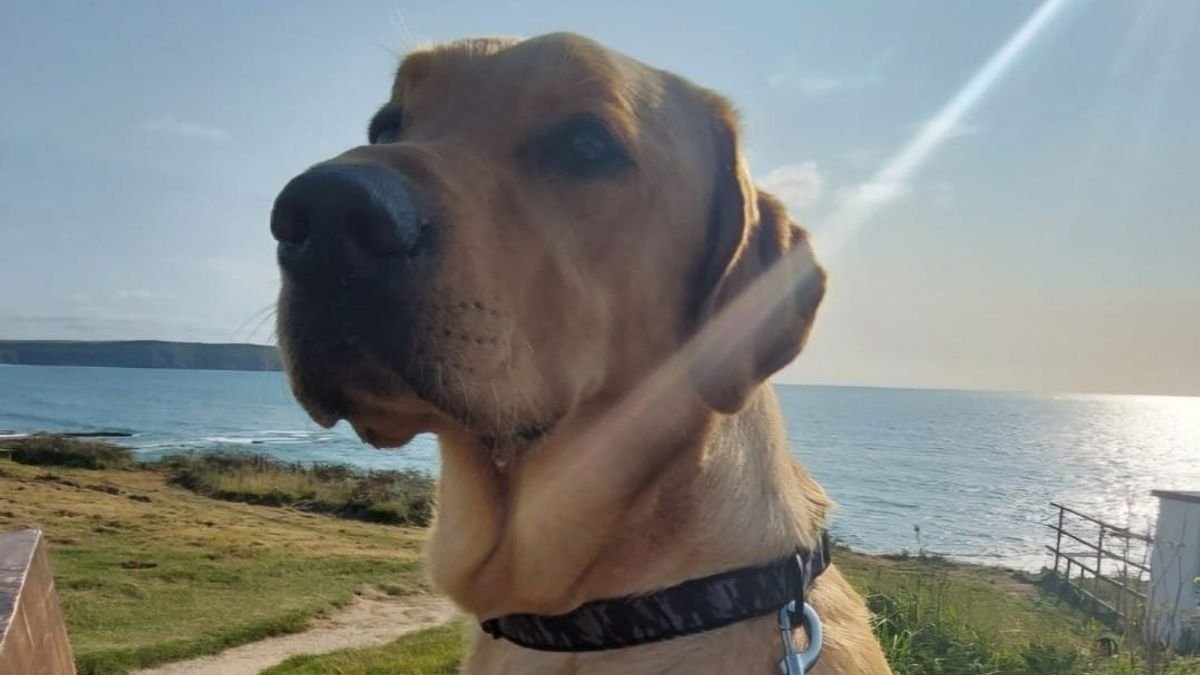

A Labrador named Stanley may have uncovered a 160-year-old murder mystery by digging up a bottle of poison in Clyst Honiton, Devon. The discovery was made by Stanley’s owner, Paul Phillips, who initially mistook the blue vial for a pipe until he noticed the warning ‘Not To Be Taken’ inscribed on it.
Further investigation revealed the dark history behind the poison bottle. It was linked to Mary Ann Ashford, a former resident who poisoned her husband, William, in 1865. Mary was subsequently executed, drawing a crowd of 20,000 spectators and contributing to the end of public executions.
Paul expressed his fascination with the historical find, highlighting Stanley’s persistent digging in the same spot over the past year. The bright blue poison bottle, found in impeccable condition, led Paul to research its origins, confirming it as a Victorian-era artifact. The proximity of the murder to their residence and the bottle’s deliberate burial suggested an attempt to conceal evidence.
Mary’s motive for poisoning her husband was driven by a romantic involvement with another man, Frank Pratt, whom she intended to be with using the inheritance from William’s estate. Suspicion arose after William’s sudden illness and subsequent death, leading to Mary’s arrest and eventual conviction for arsenic poisoning.
Paul shared his discomfort with keeping the eerie artifact inside his house due to the grim history associated with it. The bottle currently resides in the garage, sparking curiosity among Paul’s family and neighbors. Stanley’s digging behavior ceased after the discovery, prompting Paul to seek assistance from a local historian to delve deeper into the intriguing narrative.
The unearthing of the blue poison bottle sheds light on the mid-19th-century era when such items were in use, adding a layer of historical significance to the unexpected find.