

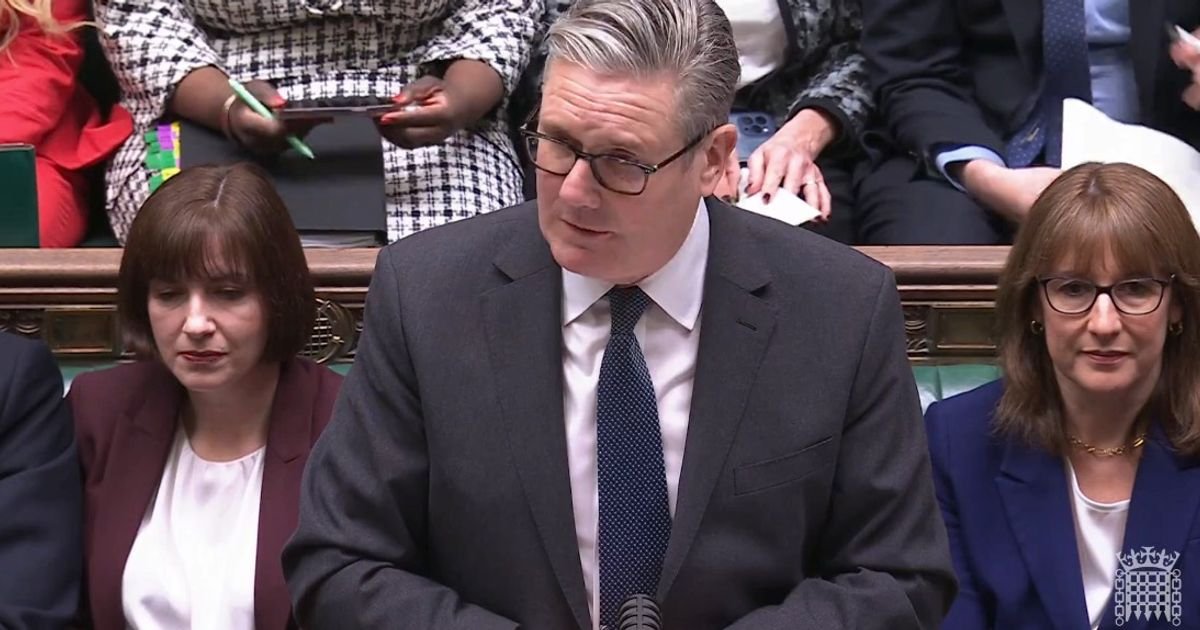

Keir Starmer is set to be questioned by Members of Parliament for the first time since Angela Rayner cautioned that Labour is under pressure to implement reforms within a limited timeframe.
During Prime Minister’s Questions, it is expected that the Prime Minister will face inquiries regarding criticisms made by his former Deputy Leader, who suggested that the party is increasingly associated with “the Establishment” rather than with working-class individuals.
This interaction follows a recent outburst from US President Donald Trump, who reiterated his belief that Keir Starmer is not comparable to Churchill, expressing frustration over the UK’s decision not to partake in military actions in the Middle East.
Trump’s outburst was triggered by the PM’s stance on not involving the UK in broader conflicts and instead collaborating with allies to strategize the reopening of the Strait of Hormuz.
In a separate exchange, the PM addressed comments made by Tory MP Nick Timothy, the shadow justice secretary, regarding Muslims. Starmer highlighted an instance where Timothy criticized a photo of Sadiq Khan and others praying in Trafalgar Square, deeming it as “an act of domination straight from the Islamist playbook.”
Kemi Badenoch raised questions about Peter Mandelson’s past inquiries before his appointment, to which the PM responded with an acknowledgment of past mistakes and commitments towards supporting ongoing investigations.
During the session, Labour MP Dr. Marie Tidball questioned the PM on the increasing costs of heating oil. In response, Keir Starmer emphasized the importance of de-escalating tensions in the Middle East to alleviate the financial burden on families, urging accountability from those who advocated for hasty military actions without considering the consequences.
The PM initiated the session by urging individuals impacted by the meningitis outbreak to seek antibiotic treatment promptly.
Zack Polanski proposed a revision of the UK’s budget regulations, recommending the introduction of “fiscal referees” to monitor debt levels and reassess the role of the Office for Budget Responsibility.
In a rebuttal to Polanski’s economic proposals, Labour Party Chair Anna Turley criticized the Green leader’s plan to print money, emphasizing the Labour government’s commitment to economic stability, infrastructure investments, and improved living standards in contrast to years of Tory austerity measures.
Nigel Farage, known for his absence during PMQs in protest, posed a question addressing his recent policy shift on the Iran conflict.
Polanski reiterated an apology for previously controversial statements, emphasizing accountability and a focus on reducing expenses to benefit the public.
Discussing economic reforms, Polanski emphasized the need for substantial changes to address the negative impacts of Thatcherism and austerity on the UK economy.
Gordon Brown advocated for collaborative efforts among UK governments to enhance end-of-life care, highlighting the need for consistent and compassionate care for individuals approaching the end of their lives.
In a keynote speech at the New Economics Foundation, Zack Polanski criticized the conflict in the Middle East as a non-defensive, elective war with global repercussions, including heightened instability and oil price fluctuations.
Following Angela Rayner’s critical address challenging Keir Starmer’s leadership, anticipation builds for the upcoming PMQs session, with recent focus also on government immigration policies.