

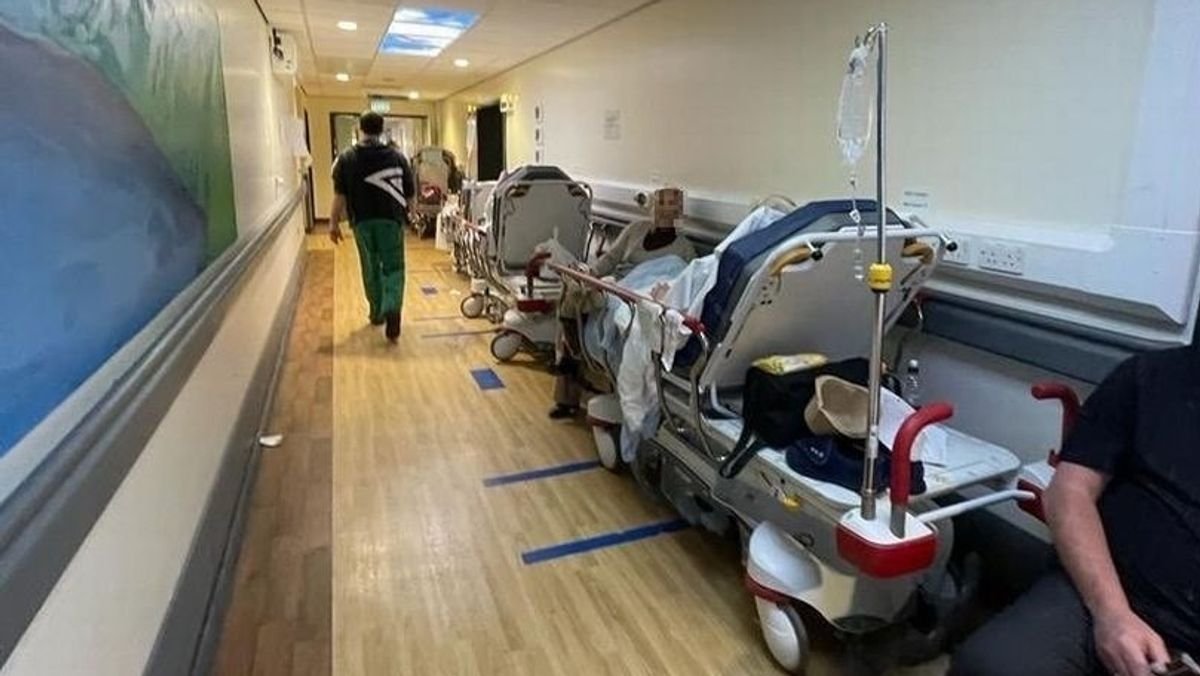

Nurses and doctors are reportedly avoiding eye contact with patients due to the ongoing crisis of providing care in hospital corridors, according to statements made to MPs. Leaders in NHS staff have raised concerns over the inadequate care being given in corridors and unconventional spaces such as storage rooms, labeling it a “national scandal” leading to a significant number of fatalities.
The Health and Social Care Committee recently discussed the issue of corridor care, which has evolved from temporary solutions to permanent ward spaces, with patients enduring lengthy waits on trolleys before being admitted. Dr. Ian Higginson, president of the Royal College of Emergency Medicine (RCEM), emphasized that corridor care is a visible consequence of overcrowding, labeling it a national crisis and scandal primarily caused by prolonged hospital admission waits.
Statistics from the NHS show that patients spending over 12 hours in A&E are at a considerably higher risk of death within 30 days compared to those seen within two hours. A survey conducted by the RCEM revealed that more than half of Emergency Department Clinical Leads in England view their A&E departments as unsafe for patients.
Dr. Higginson further highlighted that approximately 16,000 patients annually are succumbing to long waits in emergency departments, emphasizing the severity of the situation. The Royal College of Nursing (RCN) also reported instances of patients dying in distressing conditions while awaiting care.
Acknowledging the emotional toll on healthcare professionals, RCN general secretary Professor Nicola Ranger expressed concerns about nurses feeling ashamed and avoiding eye contact with patients in challenging situations. Dr. Higginson shared personal experiences of staff struggling to face patients in waiting rooms, indicating the emotional strain caused by the crisis.
Over the past decade under Conservative governance, A&E wait times have steadily increased, reaching alarming levels by 2025. Efforts are being made to address the crisis, with the NHS implementing changes to A&E operations to prioritize urgent cases and reduce overcrowding. The new approach aims to enhance emergency care delivery, particularly for elderly patients who are at higher risk due to extended waiting times.
Health Minister Karin Smyth emphasized the government’s commitment to ending corridor care practices by the end of the current parliamentary term, underscoring the urgency of implementing effective solutions to improve patient care standards.