

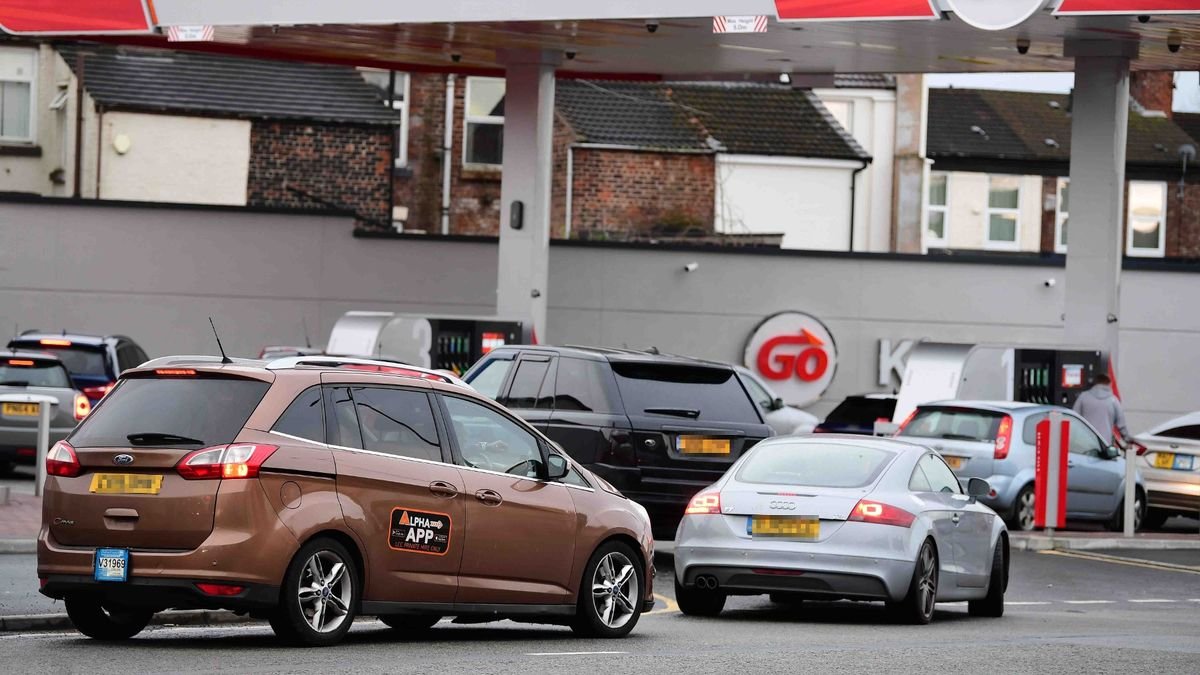

The escalating energy crisis stemming from tensions in the Middle East has prompted authorities to issue advisories to Brits, urging them to adopt measures such as remote work and reduced driving speeds. This crisis has driven a surge in global oil prices following Iran’s threat to disrupt oil transportation through the vital Strait of Hormuz due to the US-Iran conflict.
Household energy costs are expected to spike to £1,973 per year for dual fuel consumers by July, coinciding with the next energy cap review, while petrol prices have risen to 142.62p per liter, with unleaded petrol hitting 162.66p per liter. The International Energy Agency (IEA) is calling for immediate actions to curb fuel demand.
To address the energy challenges, the IEA recommends the following measures:
1. Encouraging remote work to reduce oil consumption related to commuting.
2. Implementing a 10 km/h reduction in highway speed limits to lessen fuel usage for vehicles.
3. Promoting the use of public transportation to decrease oil demand.
4. Introducing number-plate rotation schemes in large cities to alleviate congestion and fuel consumption.
5. Encouraging car sharing and eco-driving practices to enhance fuel efficiency.
6. Implementing efficient driving practices for commercial vehicles to reduce diesel usage.
7. Shifting LPG use away from transportation to preserve it for essential purposes like cooking.
8. Minimizing air travel when alternate options are available to alleviate pressure on jet fuel markets.
9. Encouraging the adoption of modern cooking solutions to reduce reliance on LPG.
10. Leveraging petrochemical feedstocks flexibility and implementing short-term efficiency measures in industries to reduce oil consumption.
These measures aim to mitigate the impact of the energy crisis and promote sustainable energy practices amidst the ongoing economic challenges.