


A massive underwater wave associated with this year’s El Niño weather event is making its way up the western coast of the Americas, sparking concerns among scientists about how climate change is amplifying the effects of this natural occurrence.
Known as the Kelvin wave, this phenomenon is not surprising. However, it is occurring against the backdrop of human-induced climate change, which has already led to warming of the oceans and atmosphere.
A smaller wave reached British Columbia earlier this summer, and another one is anticipated to arrive in one to two weeks, as confirmed by Bill Merryfield, a research scientist at Environment and Climate Change Canada.
The Kelvin wave is a naturally occurring weather pattern, similar to El Niño itself. In regular years, easterly winds blow across the equator in the Pacific Ocean, pushing water from South America toward Asia. During El Niño years, these winds weaken or change direction, allowing water to move eastward.
When the Kelvin waves reach the South American coast, they split and travel along the coasts of the Americas, eventually reaching Canada. Sea-level data from Tofino on Vancouver Island’s Pacific coast reflects the impact of the earlier Kelvin wave in June.
Rather than creating a massive tsunami-like wave, the Kelvin wave causes a temporary rise in sea levels. Described as a broad, shallow bulge in the ocean’s surface, it may elevate sea levels by about a foot, as explained by University of California climate scientist Daniel Swain.
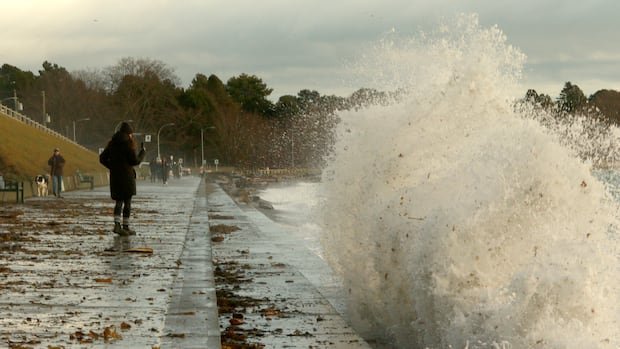
The effects of the wave are most pronounced during king tides, especially high tides resulting from the gravitational pull of the sun and moon. When combined with the sea level rise from the Kelvin wave, exacerbated by winter storms and storm surges, the potential for coastal trouble increases significantly.
The compounding effects of the Kelvin wave, intensified northward winds, and climate change-induced sea-level rise could exacerbate flooding and erosion along the coast, reminiscent of past instances where strong El Niños caused widespread erosion in California.
Authorities in California are taking preemptive measures, such as adding emergency sand to beaches, anticipating a 6 to 12-inch increase in water levels due to the Kelvin wave.
Merryfield cautioned that the impacts of the Kelvin wave and El Niño could extend beyond the current season. During El Niños, excess heat stored in the oceans due to greenhouse gas emissions is released into the atmosphere, potentially leading to 2027 being the warmest year on record by a significant margin.
The implications of the Kelvin wave and El Niño could have far-reaching consequences, as warned by Merryfield, aligning with similar concerns raised by other climate research organizations and scientists.