

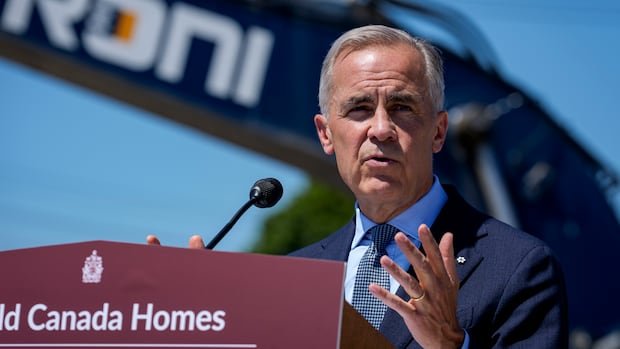

A little over a year ago, Prime Minister Mark Carney made an announcement in Ottawa regarding the initiation of Build Canada Homes, a federal government program aimed at addressing the housing crisis and expediting residential construction. The initiative aims to increase the production of affordable housing as concerns grow within the industry about the slow progress of housing development nationwide.
Build Canada Homes has committed to supporting the construction of approximately 19,000 affordable housing units across the country, with only about 2,000 units currently under construction. Dave Wilkes, the president and CEO of the Building Industry and Land Development Association in Toronto, expressed the sentiment that the industry is eager to see faster progress, emphasizing the need for speed in the construction sector.
The federal housing agency transitioned into a Crown corporation in July, following the enactment of the Build Canada Homes Act. Much of the past year has been dedicated to overcoming bureaucratic obstacles, finalizing land transfers, and establishing intergovernmental agreements to facilitate the program’s implementation.
According to Build Canada Homes spokesperson Joshua Coke, the housing sector in Canada is facing unprecedented challenges, with a significant demand for affordable housing surpassing the available supply. The agency’s primary focus is on constructing non-market housing, where rents are income-based rather than dictated by market rates. Additionally, they are collaborating with developers to create affordable housing options for the middle class.
Kevin Fettig, president of CMI Financial, highlighted that the Canadian government had ceased funding and constructing new affordable housing for nearly three decades under both Conservative and Liberal administrations. This absence of investment led to a lack of focus on affordability, which has now become a pressing issue.
Federal Housing Minister Gregor Robertson acknowledged the historical neglect of Ottawa in addressing housing affordability and expressed a commitment to rectifying this oversight. The approach of Build Canada Homes, which provides support to builders, developers, and community partners to expedite residential projects, is expected to yield positive outcomes in due course, albeit requiring time, effort, and financial resources to bridge the existing gap.
Even the market-priced housing segment is experiencing delays, with housing starts hovering around 250,000 annually over the past two years, according to the Canada Mortgage and Housing Corporation (CMHC). To restore affordability levels from 2019, CMHC’s chief economist Mathieu Laberge emphasized the need to double the pace of current housing starts, with an estimated 417,000 to 469,000 units needing to be built annually by 2036.
Laberge stressed the importance of addressing the supply gap to ensure future affordability, noting a substantial pent-up demand from younger generations and newcomers. Wilkes from the Building Industry and Land Development Association credited initiatives such as the HST rebate and reduction in development charges in Ontario for recalibrating overheated housing markets like Toronto.
The recent partnership between Ottawa and Alberta to construct affordable housing units underscores the urgent need for new housing supply in rapidly growing provinces. Build Canada Homes aims to promote innovative construction methods, such as modular and prefabricated housing, to streamline the construction process and enhance affordability.
Overall, the focus remains on modernizing the industry to accelerate construction timelines and improve affordability, as emphasized by Federal Housing Minister Robertson.