

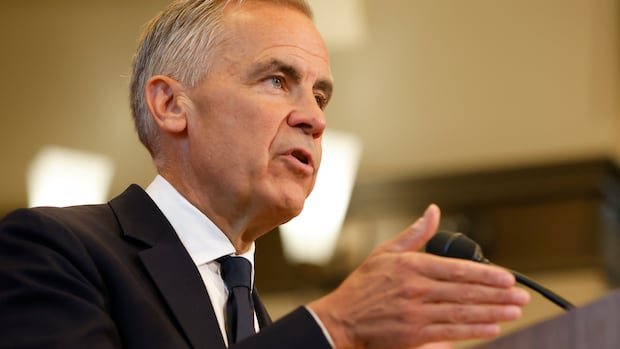

Prime Minister Mark Carney instructed his negotiators to end discussions when the Trump administration presented unacceptable demands related to culture, autos, and sovereignty. Carney expressed that the U.S. lacked interest in establishing a genuine economic partnership with Canada. Speaking in Ottawa, Carney emphasized that the U.S. proposal was imbalanced, with excessive requests and inadequate offerings.
Carney outlined several specific issues raised by the U.S., including objections to Canadian subsidies for French culture, the presence of French-language media online, and the bilingual labeling requirement on products in Canada. He firmly stated that these demands were never up for negotiation and did not align with Canadian values.
Regarding the automotive sector, Carney criticized the U.S. for unfair treatment of Canadian-made parts and attempting to impose tariffs selectively on certain vehicles without justification. He warned that accepting such terms would harm Canada’s vehicle production in the long run.
Ontario Premier Doug Ford supported Carney’s decision to walk away from the negotiations, affirming that Canada is prepared for any trade conflicts with the U.S. Ford criticized the proposed deal as detrimental to Ontario’s industries and emphasized the need to stand up for Canadian interests.
Carney highlighted that the U.S. aimed to undermine Canada’s sovereignty by restricting its ability to engage in other trade agreements. He emphasized that such limitations were unacceptable as Canada values free trade and collaboration with global partners.
In response to the breakdown of negotiations, Conservative Leader Pierre Poilievre expressed disappointment over the U.S. tariffs on Canada. Poilievre pledged to protect Canadian industries and advocated for fair trade agreements devoid of one-sided tariffs.
Looking ahead, Carney expressed concern about the potential job losses and economic impact of the failed trade deal. He assured that the government would support affected businesses and individuals, pledging ongoing assistance beyond the current administration.
Economist Trevor Tombe warned that the imposed tariffs could lead to significant job losses across Canada, particularly affecting provinces heavily reliant on exports. The federal government estimated the tariffs could jeopardize thousands of jobs and impact billions of dollars in Canadian goods.
Carney underscored the importance of safeguarding Canada’s sovereignty and industries, reaffirming the government’s commitment to defending national interests in trade negotiations.
[End of Rewritten Article]