

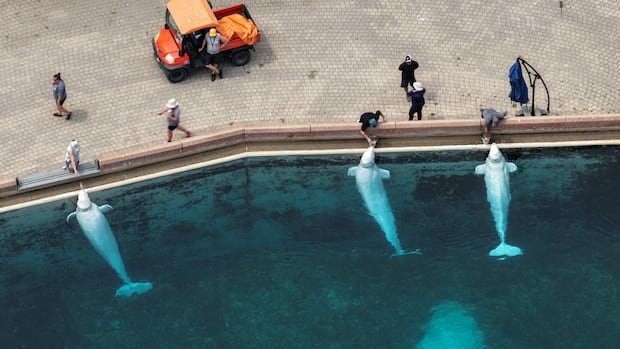

Post-mortem examinations conducted on two former beluga whales from Marineland revealed that the whales were ailing upon their recent transfer to Shedd Aquarium in Chicago. Peekachu, aged 23, and Rain, aged 20, were part of a complex operation that relocated 30 belugas and four dolphins from Niagara Falls, Ontario, to several facilities in the United States and Spain. The preliminary medical analysis disclosed that the two whales suffered from substantial, long-standing gastrointestinal issues that likely existed before their arrival at Shedd.
Additionally, the examinations highlighted the presence of foreign objects in the stomachs of the female belugas. Notably, Peekachu had bird feathers, sticks, and large rocks in her stomach, while Rain had small paint-like material in hers. These findings suggested that the whales had ingested these items before their rescue and were not linked to their demise. There was no evidence of communicable diseases found during the initial investigations.
Shedd Aquarium stated that the foreign materials were not the direct cause of death for the belugas. They emphasized that the whales’ health was compromised even before their relocation, and the observed inflammation was an underlying issue. The deaths of the belugas have raised concerns about the animals’ well-being and the need for proper care and monitoring. Marine mammal expert Naomi Rose highlighted that intelligent and bored animals, like belugas, may inadvertently ingest foreign objects if not supervised.
The necropsy results for Osiris, another beluga from Marineland who passed away at Shedd, are currently pending. Furthermore, two other animals from Marineland, Jelly Bean and Echo, also died after being transferred to Oceanogràfic de València in Spain, with post-mortem examinations underway in those cases. Ottawa officials expressed dismay over the neglect evident in the preliminary necropsy findings and praised the professionals involved in the rehoming operation for ensuring a dignified transition for the animals.
Animal advocacy groups have questioned the health status of the belugas before their relocation, highlighting the importance of proactive measures to safeguard the well-being of captive marine mammals. Camille Labchuk, from Animal Justice, raised concerns about the lack of prior assessment of the whales’ health and the need for stricter oversight to prevent such tragedies. The ongoing investigations aim to shed light on the circumstances surrounding the belugas’ deaths and improve the welfare of rehoused marine animals.
The Chicago aquarium acknowledged the challenging conditions the belugas were rescued from and noted the inherent risks associated with moving animals with pre-existing health issues. Labchuk emphasized the need for better preparation and care to prevent future fatalities among captive whales. The tragic events surrounding the belugas underscore the importance of thorough health evaluations and comprehensive monitoring protocols for marine animals in conservation efforts.
Photo: [Shedd Aquarium/ Brenna Hernandez]