

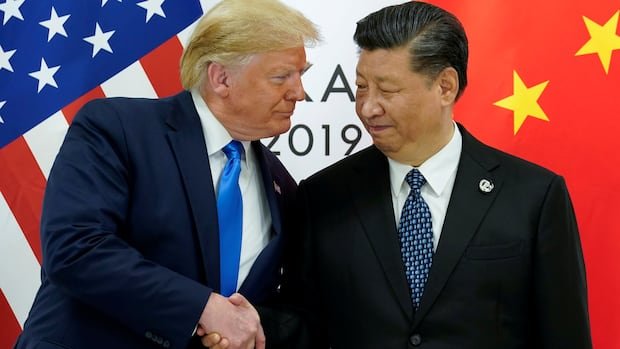

U.S. President Donald Trump warmly welcomed Chinese President Xi Jinping this week, praising him as an exceptional leader and aiming to expand the trade deal both nations agreed upon last year to avoid certain tariffs and establish a trade truce. Trump has previously touted successful trade agreements with China and even entertained the idea of Chinese automakers setting up manufacturing plants in the U.S.
During a recent interview on Fox News, Trump expressed openness to Chinese companies building car factories in the U.S. He also finalized an extension with China on Wednesday. Despite these positive interactions, Trump and his administration have criticized Prime Minister Mark Carney for a smaller trade deal with China, allowing the entry of 49,000 Chinese electric vehicles with reduced tariffs. In response, U.S. officials voiced discontent, with Transportation Secretary Sean Duffy suggesting potential regrets over the decision.
Commerce Secretary Howard Lutnick took a harsher stance, accusing Canada of siding with China over the U.S. and questioning the effectiveness of Carney’s trade approach. Jia Wang, a senior fellow at the China Institute at the University of Alberta, highlighted the apparent double standards in U.S. trade practices, emphasizing the hypocrisy in their demands on trading partners.
Trade relations between Canada and China gained momentum in 2025 amid U.S. tariff pressures, leading to a shift in business strategies. However, Canada would need a substantial increase in trade with China to match the trade volume the U.S. conducts annually. Despite importing significantly less from China compared to the U.S., Canada faces scrutiny from U.S. Senator Rick Scott for deepening ties with China.
The debate over trade partnerships continues, with differing opinions on the risks and benefits of trade relationships with China compared to the U.S. While Trump advocates for closer economic ties with China, critics point out the contradictions in U.S. policies that discourage other countries from similar engagements. As China emerges as a formidable economic player, Manger and Wang emphasize the importance for Canada to navigate relations with both superpowers strategically for long-term prosperity.
In a world where power dynamics shape international trade, playing the long game and making informed decisions will be crucial for Canada as it navigates the complexities of global commerce.