

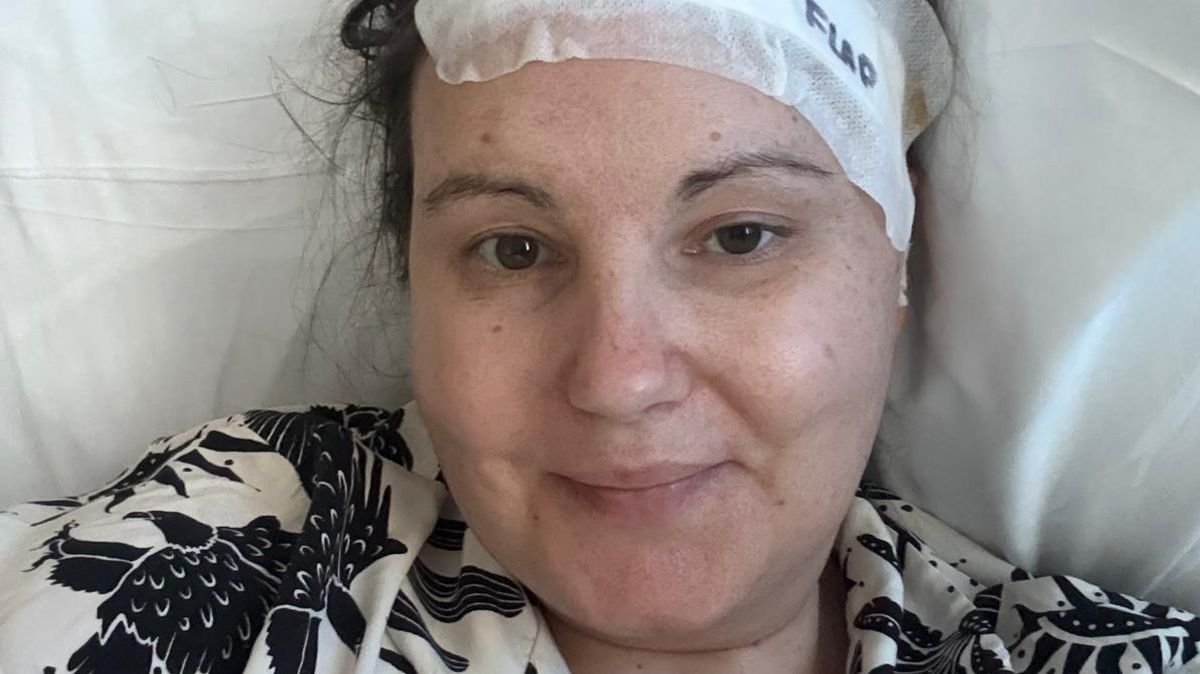

A mother who began experiencing severe headaches was initially told they were due to anxiety, until her menstrual cycles abruptly ceased in her thirties. Jodie Boulton, hailing from Caerphilly, visited her doctor’s office multiple times, with each visit resulting in an anxiety diagnosis for her symptoms.
It wasn’t until her periods completely stopped that concerns were raised, leading to an MRI scan revealing a mass the size of a satsuma on her brain, which doctors believed could have been present for two decades.
Expressing her emotions, Jodie, aged 38, stated, “I felt a mix of anger and relief. Angry for enduring years without answers, but relieved to finally uncover the cause and hopeful for potential treatment. I had doubted myself for so long, only to find a shocking satsuma-sized tumor in my brain. It’s hard not to ponder how things might have been different if detected earlier.”
Jodie’s medical journey commenced in 2020 and culminated in a referral for a scan by an endocrinologist in March 2025, as the mass was impacting her hormone levels.
Despite being informed she could monitor the tumor’s growth and worsening symptoms, Jodie began experiencing balance issues and double vision. In June 2025, after a 12-hour surgery, 85% of the tumor was successfully removed, leaving the remaining 15% intertwined with her optic nerve. Subsequent analysis confirmed it as a low-grade meningioma, the most prevalent type of brain tumor.
Following the surgery, Jodie encountered complications as her wound began oozing, leading to an infection that necessitated the removal of a section of her skull. She spent two weeks in the hospital receiving strong antibiotics and is awaiting a titanium plate for skull reconstruction, with the procedure delayed twice.
Currently, the mother must wear a protective hard hat at all times due to safety concerns, limiting her outings and causing anxiety. She lamented, “My independence feels lost, and I’m frustrated that a proper wound treatment could have expedited my return to normal life.”
Previously conducting self-tests for tumors weekly at her job as an optical advisor, Jodie is now sharing her story to raise awareness about the condition. In February, she completed a 10,000-step challenge in support of Brain Tumour Research, raising £550.
Encouraging open dialogue, Jodie emphasized, “Sharing with loved ones and seeking support is crucial. My symptoms have vanished, and I feel rejuvenated like a decade ago. Despite an impending surgery, my narrative is one of optimism and resilience. Brain tumors do not discriminate based on age or gender. I urge everyone to contribute to research efforts that could alter the trajectory for brain tumor patients.”
Dr. Karen Noble, Director of Research Policy and Innovation at Brain Tumour Research, highlighted the absence of brain tumor clinical trials in Wales for the past five years. She emphasized the need for expanded access to trials, integration of genomic sequencing into standard care, and increased research funding to enhance patient outcomes and survival rates.