

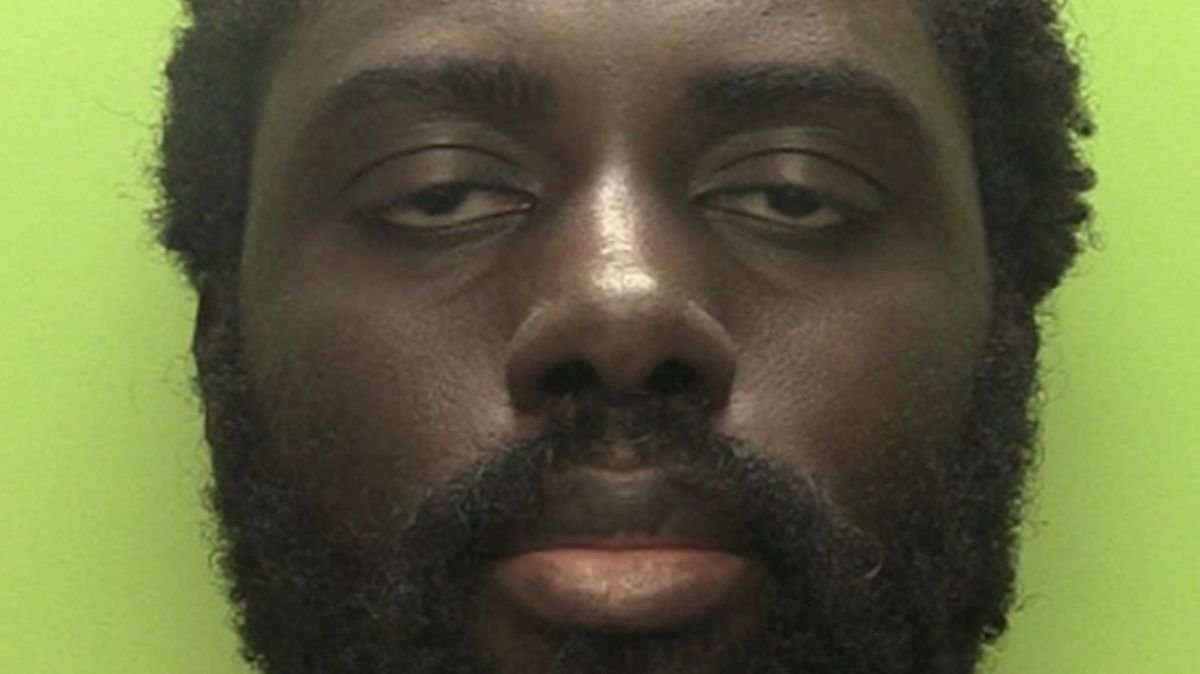

Twisted triple murderer Valdo Calocane is currently confined behind a thick glass barrier at one of the UK’s limited high-security psychiatric facilities due to the significant risk he poses to other patients. Calocane, a 34-year-old paranoid schizophrenic diagnosed in 2020, has been held at Ashworth High Secure Hospital in Maghull near Liverpool for the past two years after being convicted of killing Barnaby Webber, Grace O’Malley-Kumar, and Ian Coates, and attempting to harm three others during a violent spree in Nottingham on June 13, 2023.
Since his admission, Calocane has been under a stringent long-term segregation (LTS) program at Ashworth due to his ongoing threat level. The facility, housing approximately 200 male individuals, has a history of accommodating some of the UK’s most disturbed criminals, including notorious figures like Ian Brady. Calocane is granted extra security measures, such as being housed in a secure room with a hatch on the door.
Continuous supervision is enforced on Calocane, with minimal interaction with other patients due to his highly unpredictable behavior. Staff were briefed on his severe condition upon his arrival, emphasizing the need for utmost caution. Under the LTS protocol, Calocane is placed in a sparsely furnished cell, with limited visitation behind a glass partition.
The lockdown measures are implemented to safeguard both staff members, who Calocane’s voices sometimes incite him to attack, and other patients. Daily routines for patients in LTS involve limited time outside their cells, closely monitored by staff, with most activities occurring within the confined space. Basic necessities, such as meals and cutlery, are strictly regulated to prevent security breaches.
Additional precautions include delivering food and medication through a hatch to minimize risks associated with direct contact. Showers are also tightly scheduled to ensure safety, often after other patients have left the area to maintain secure supervision. Recent inquiries into Calocane’s case revealed that Nottinghamshire’s mental health trust restricted access to records concerning his past interactions with staff.