

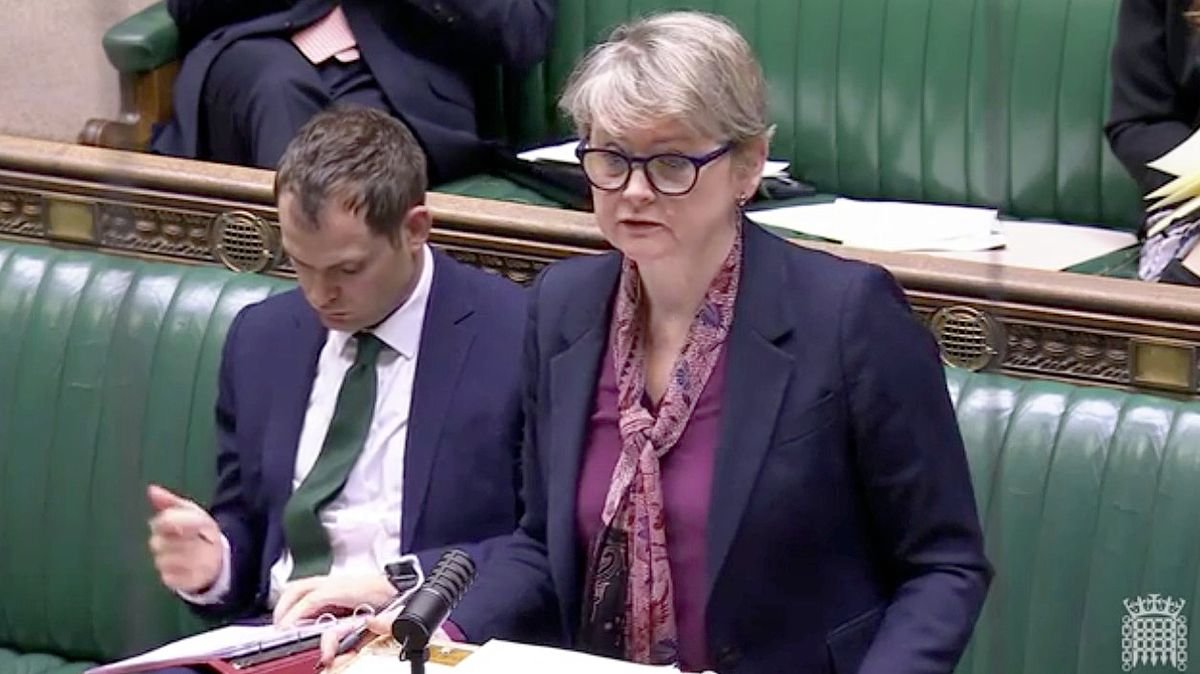

Furious Members of Parliament have confronted Yvette Cooper over her announcement of significant cuts to international aid in order to boost defense spending. The Foreign Secretary revealed that funding would be redirected from projects in Afghanistan, Somalia, and Yemen to prioritize conflict zones like Ukraine, Palestine, Sudan, and Lebanon.
Ms. Cooper justified the move as necessary to support the largest increase in defense spending since the Cold War. She emphasized that countries such as Germany, France, and Sweden had made similar decisions, portraying it as a pragmatic response to global threats rather than an ideological shift.
The UK’s overseas budget is set to decrease from 0.5% to 0.3% of gross national income by 2027, resulting in a reduction of over £6 billion in spending. Despite the cut, Ms. Cooper affirmed the government’s intention to restore aid to 0.7% of GNI once fiscal conditions permit.
The announcement included a substantial £874 million reduction in bilateral aid to Africa by 2028, representing a 56% decrease. Notably, funding for the Global Polio Eradication Initiative would cease, although efforts to combat polio would continue through alternative means.
Critics expressed outrage at the decision, arguing that it would diminish the UK’s global influence and potentially create opportunities for other major powers like Russia and China to fill the void. Labour MP Sarah Champion criticized the cuts, warning of increased global vulnerability rather than improved defense.
Liberal Democrat Monica Harding condemned the government’s actions, highlighting the irony of a Labour administration cutting foreign aid more severely than previous Conservative governments or even Donald Trump. She characterized the move as both morally reprehensible and strategically shortsighted.
Ms. Cooper assured that women, girls, and education projects in conflict zones would remain top priorities under the revised aid strategy. She emphasized the UK’s ongoing commitment to addressing climate change and biodiversity loss, with a renewed focus on leveraging private investment in development initiatives.
The Foreign Secretary pledged continued support for countries facing severe humanitarian crises, earmarking £1.4 billion annually for the most conflict-affected states. While certain nations like Ukraine, Sudan, Palestine, and Lebanon would see their funding protected, others would experience reductions in direct bilateral aid.
Ms. Cooper clarified that traditional bilateral funding for G20 countries would be phased out, with a focus on preserving assistance to humanitarian priorities like Yemen, Somalia, and Afghanistan through multilateral programs. Additionally, countries such as Pakistan and Mozambique would remain development priorities despite significant cuts to their grant funding.
The government also announced an £11 million increase in funding for the BBC World Service to combat misinformation. Ms. Cooper stressed that the reduced aid budget necessitated tough choices to prioritize aid where it is most needed, positioning the UK as a significant contributor in global development efforts.
Despite criticisms from various quarters, the Foreign Secretary underscored the government’s commitment to international leadership and advocacy for development issues, including during the UK’s upcoming G20 presidency. However, concerns were raised about the potential impact of the aid cuts on healthcare, education, and humanitarian assistance, with warnings of adverse consequences for the world’s most vulnerable populations.