

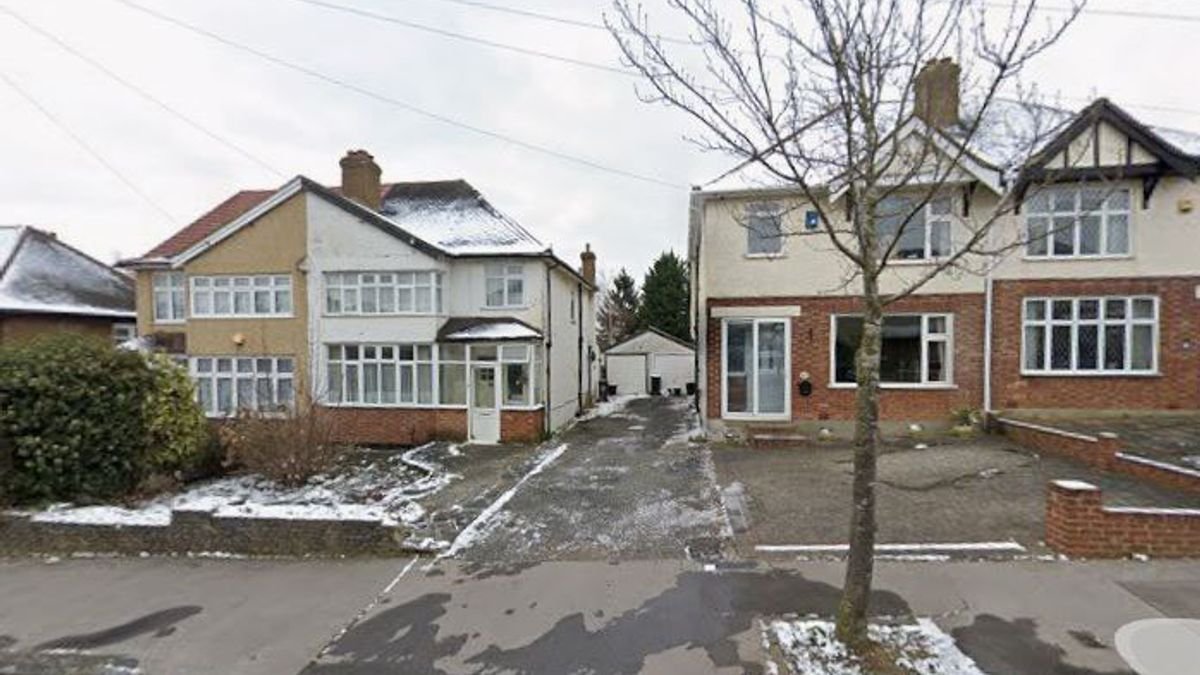

A pensioner who regularly attended church has been unsuccessful in her legal attempt to regain ownership of her £575,000 property after a serious disagreement regarding her parking of a Ford Focus vehicle.
Marie Potter, aged 75, initially had a good relationship with her neighbor, Kirsten McGowan, when they both moved into their respective houses on Bennett’s Avenue, Shirley, Croydon, back in 1998. However, their friendship deteriorated due to a dispute over Mrs. Potter’s car obstructing access to her neighbor’s garage via a shared driveway, leading the matter to be resolved in court.
Following a court hearing at Bromley County Court in August 2020, the pensioner was instructed to pay approximately £70,000 in costs and damages to her neighbor. Subsequently, in the following year, a charge was placed against her property, which was valued at £575,000 at the time.
As a result, an order for sale and repossession of the house was issued. In April 2023, Mrs. Potter was forced to leave her residence after failing to settle the outstanding judgment debt. Her belongings were later removed and stored at her expense. Three years later, Mrs. Potter took her case to London’s High Court, attempting to counter-sue Mrs. McGowan in an effort to reclaim her unsold property.
Representing herself with the assistance of a retired solicitor from her church, Mrs. Potter argued before Judge David Halpern KC that the possession order of her property was invalid and claimed damages exceeding £250,000 from her neighbor.
However, the judge ruled against her, stating that the possession order for the house was lawfully executed. Regarding the outcome for the devout pensioner, the judge remarked, “This serves as another example of the financial repercussions of neighborly conflicts for individuals with limited financial resources.”
During her testimony in court, Mrs. Potter mentioned that she had resided in her home for over 25 years and had initially maintained an amicable relationship with Mrs. McGowan. Nevertheless, disagreements arose between the two families over Mrs. McGowan’s grievances about the parking of Mrs. Potter’s vehicle, which obstructed access to her garage through the shared driveway. This disagreement led to legal action at Bromley County Court, resulting in Mrs. Potter being ordered to pay around £30,000 in damages, plus legal expenses, in August 2020, leading to a subsequent charge against her property.
In December 2021, Mrs. McGowan’s legal representatives obtained an order for the sale of Mrs. Potter’s house, and in April 2023, a warrant for possession was enforced, resulting in Mrs. Potter’s eviction. Mrs. Potter has since been residing in rented accommodation in Bromley, with her belongings in storage, contending that the court order for the sale of her house was invalid and demanding its return.
Additionally, Mrs. Potter sought compensation exceeding £250,000 for the losses she incurred due to her eviction, including rent and storage costs, along with a depreciation in her property’s value exceeding £100,000. She based her arguments on a court rule stipulating that a property cannot be sold through a county court if there is a third-party charge or mortgage exceeding £30,000, as in her case.
However, Judge Halpern’s verdict confirmed the county court’s authority to enforce the sale of properties with charges or mortgages up to £350,000 in value, thereby extinguishing Mrs. Potter’s hopes of reclaiming her house.
In his judgment, Judge Halpern emphasized, “This serves as yet another example of the financial implications of neighborly disputes for individuals with limited financial means. The current legal proceedings stem from previous disputes between the parties over a shared driveway.”
“An order was issued on 26 August 2020 mandating Mrs. Potter to compensate Mrs. McGowan £30,452.95 in damages, plus £27,000 in costs. Mrs. Potter failed to settle these sums, leading to an increase in the amount due to Mrs. McGowan due to accruing interest and additional costs,” he added.
He further clarified, “Mrs. Potter has counterclaimed for extensive relief, alleging…that Mrs. McGowan trespassed by taking possession and breached her responsibilities as a mortgagee in possession.” Before proceeding with the trial on this claim, the judge needed to ascertain the validity of the house’s seizure and sale as a preliminary issue.</p