


As conflict persists in the Middle East, questions arise regarding the feasibility of implementing conscription in present-day Britain. The UK’s reduced military size has raised concerns among security experts, although Keir Starmer has emphasized the country’s current stance of avoiding broader involvement in the conflict.
Since 2010, significant cuts to the Ministry of Defence have resulted in a mere 74,000 active regular forces personnel in the British Army, marking the lowest number since the Napoleonic wars. Professor Anthony Glees, a security expert, asserts that doubling the armed forces’ size would be imperative in worst-case scenarios.
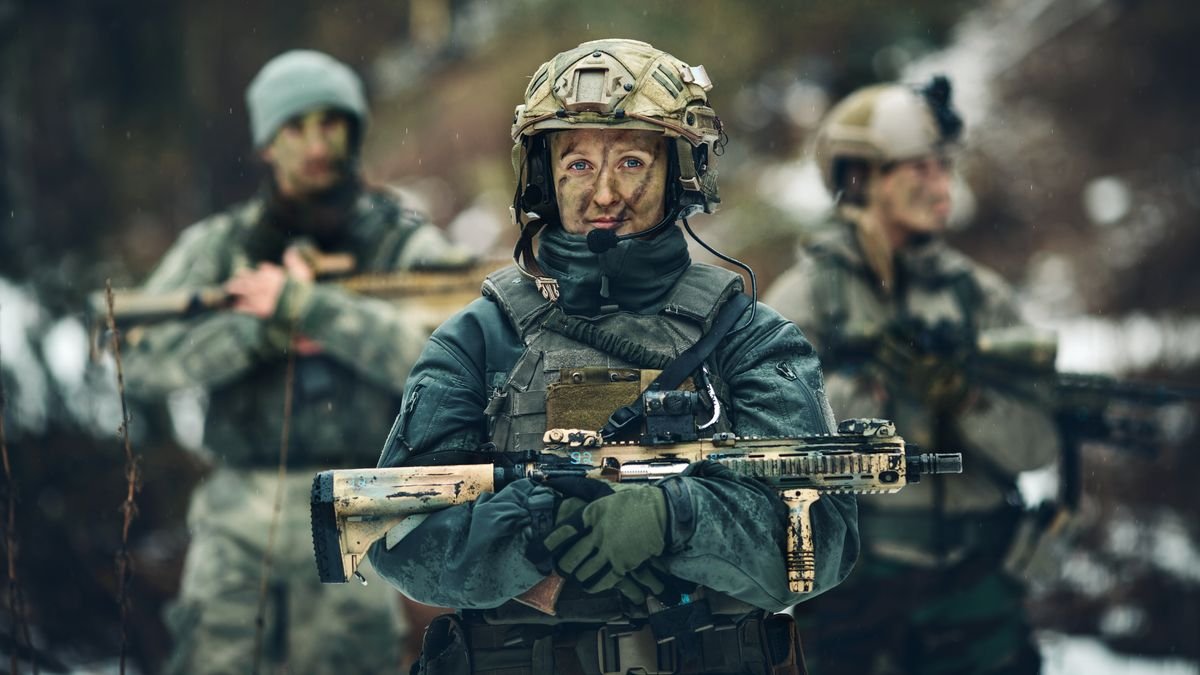
Countries like Latvia have reintroduced conscription as a precautionary measure, excluding women from compulsory military service following Russia’s incursion into Ukraine. Conversely, Denmark recently announced that women could potentially face conscription, aligning with neighboring nations Sweden and Norway, which have already integrated conscription for women in recent years.
Colonel Kenneth Strom, overseeing Denmark’s conscription program, attributed the change to a political decision driven by current security conditions to enhance combat capabilities across various military branches. In the event of conscription being enforced in the UK, certain roles might be exempt, but overall participation would be encouraged. Although women have never been called up for direct combat duties in the UK, public opinion, as per a recent YouGov poll, leans towards supporting women’s conscription alongside men if a world war were to erupt.
During World War II, British men aged 18 to 41 were mandated to register for National Service to bolster military numbers. Subsequently, a second National Service act in 1941 required single women and childless widows aged 20 to 30 to be enlisted. As the conflict progressed, individuals up to age 51 were conscripted, with those aged 52 to 60 assigned civil defense roles to ensure broad participation.
Post-war, compulsory enlistment ceased, transitioning the British armed forces to an all-volunteer structure. National Service continued until May 1963, extending to women for all armed forces roles, including combat and Royal Marines positions after restrictions were lifted in 2018.
Anthony Glees highlights the evolving nature of contemporary global conflicts, emphasizing a shift towards non-nuclear, technologically-driven, and potentially protracted wars. Economic repercussions of a conflict escalation could manifest swiftly, particularly impacting oil prices should key shipping routes like the Strait of Hormuz face disruption, potentially leading to significant inflation and hindrances to economic growth.
With military bases already established in the Middle East, the UK could find itself more directly engaged in conflicts, either defending allied bases or supporting international operations. Modern conscription models in countries like Sweden and Norway could serve as templates, where all young individuals register for potential military service, with selection criteria determining actual enlistment.