

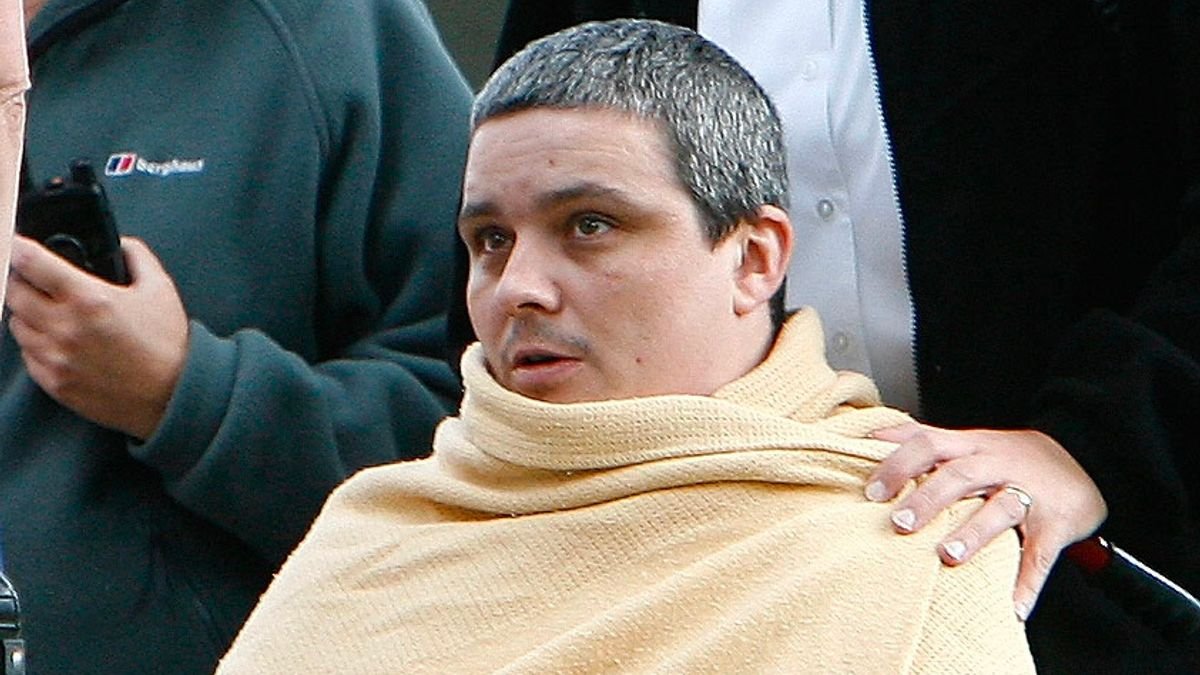

Ian Huntley, the Soham murderer, passed away in a hospital due to severe injuries sustained during a prison assault. Following his death, there has been much speculation about the fate of his remains.
Huntley, aged 52, was attacked in a workshop at HMP Frankland in County Durham. Despite receiving medical treatment for several days post the assault, he succumbed on March 7. Anthony Russell, aged 43, has been accused of his murder.
The notorious murders of his victims, Holly Wells and Jessica Chapman, both aged 10, in August 2002, cemented Huntley’s status as one of the most despised individuals in the UK. Throughout his time in prison serving two life sentences for the murders, he faced multiple attacks and made suicide attempts.
In a revealing statement, Huntley’s daughter, Samantha Bryan, expressed relief at his demise. She shared with The Sun on Sunday, “I started crying because I thought he was dead – it was an overwhelming sense of relief. Being his daughter has been a heavy burden. It felt like I could breathe again. I felt if he died, that burden died with him.”
With Huntley’s passing, discussions have arisen regarding the handling of his remains. Despite his crimes, he is entitled to a funeral, and his next of kin retain the right to claim his body.
In similar cases, the remains of notorious criminals have been disposed of differently. For instance, the ashes of the notorious Moors Murderer, Ian Brady, were scattered at sea in the early hours without any ceremony. Brady, who, along with accomplice Myra Hindley, committed heinous crimes against children in the 1960s, had his ashes placed in a biodegradable urn and dispersed at sea due to a court ruling.
Serial Killer Peter Tobin’s remains were also scattered at sea following his conviction for brutal crimes. He was found guilty of the rape and murder of Angelika Kluk, a Polish student, among other victims. Tobin’s body was cremated, and the ashes were dispersed into the sea by the local authority after no one claimed his body.
The case of mass murderer Thomas Hamilton, who tragically killed 16 children and their teacher in Dunblane in 1996, saw his remains cremated in a private service attended only by his family. The cremation took place far from Dunblane to minimize distress.
Prolific serial killer Harold Shipman, responsible for the deaths of numerous patients, had his body cremated after being held in a mortuary for an extended period. Shipman, a doctor who abused his position of trust, was convicted of patient deaths and earned the nickname “Dr. Death.”
As discussions continue regarding Huntley’s remains, the fate of such notorious criminals post their deaths serves as a reminder of the complex decisions surrounding the handling of their remains.