

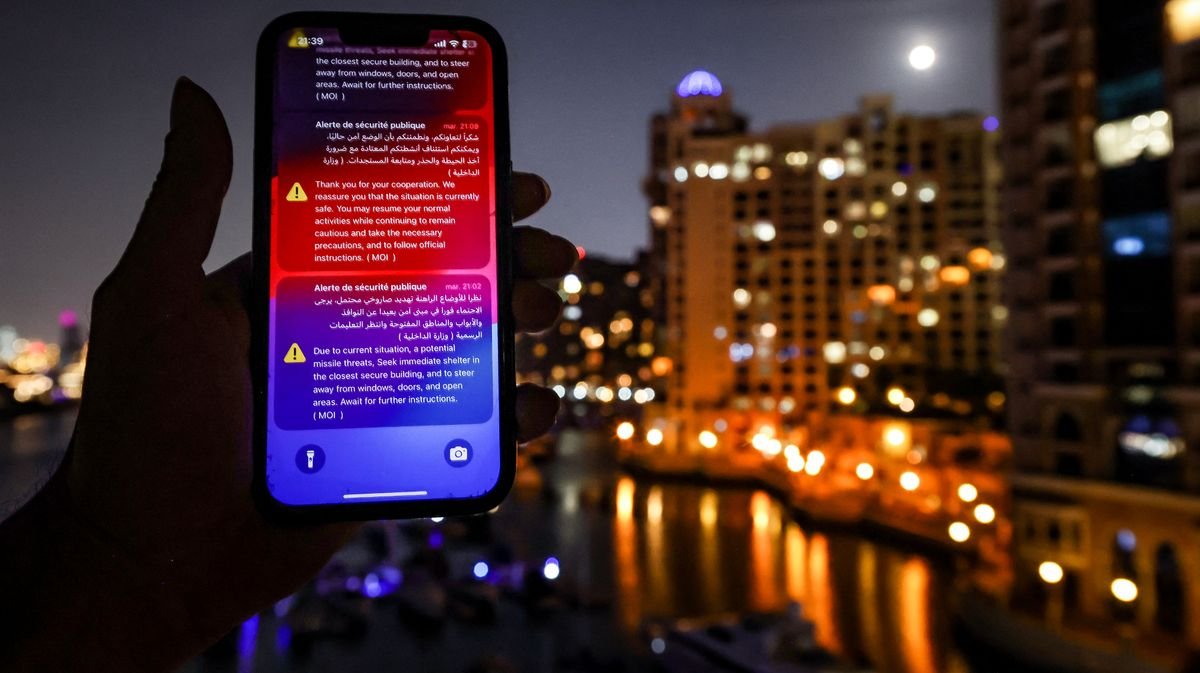

Britons escaping Dubai described a disturbing ‘propaganda’ battle facing the country as it stands to lose significant tourism revenue. UK citizens who fled mentioned that the official reports on Iranian missile activities did not align with reality. Stringent guidelines are in effect for influencers and social media users in Dubai regarding content related to the conflict, prohibiting any depiction of Iranian missile attacks. Concerns have been raised by human rights organizations about the lack of legal protection under the UAE’s ‘cybercrime’ laws, often resulting in convictions without due process.
Foreigners in Dubai risk deportation or detention for violating these regulations, including restrictions on sharing images of the advanced defense systems safeguarding the city’s airspace. The recent cancellation of flights to the Middle East by British Airways coincided with accusations against the Dubai Government for downplaying the impact of the conflict.
In a recent incident, a 60-year-old Londoner and 20 others from various nationalities were detained for filming missile activity. Assistance is being provided to them by the advocacy group ‘Detained in Dubai.’ According to international human rights lawyer Ben Keith, who represents many detainees in Dubai, the aim is to maintain Dubai’s image as a safe destination for foreign visitors and workers, even at the expense of truth.
Tourism, a key revenue source for Dubai, generates approximately $30 billion annually, positioning the city as a vibrant destination amidst its oil-rich neighbors. The recent turmoil has led to an exodus of tens of thousands of workers and tourists. Despite official narratives, eyewitnesses have pointed out discrepancies between the government’s accounts and actual events, highlighting the ongoing propaganda efforts.
The impact of the crisis extends beyond Dubai, affecting the entire Gulf region, including Qatar and Saudi Arabia. The disruption has not only jeopardized tourism but also triggered security concerns across various sectors, with foreign individuals facing stringent penalties for any actions that could harm Dubai’s reputation.
Amidst the chaos, stories emerge of British holidaymakers choosing to remain in neighboring countries like Oman despite the escalating tensions. Residents and visitors express sympathy for the local population enduring the fallout of the conflict. The crisis has prompted a large-scale evacuation of British nationals from the region, with thousands seeking repatriation to the UK.
As the situation continues to unfold, the repercussions of the conflict are felt across the Gulf states, posing significant challenges to regional stability and economic prospects.