

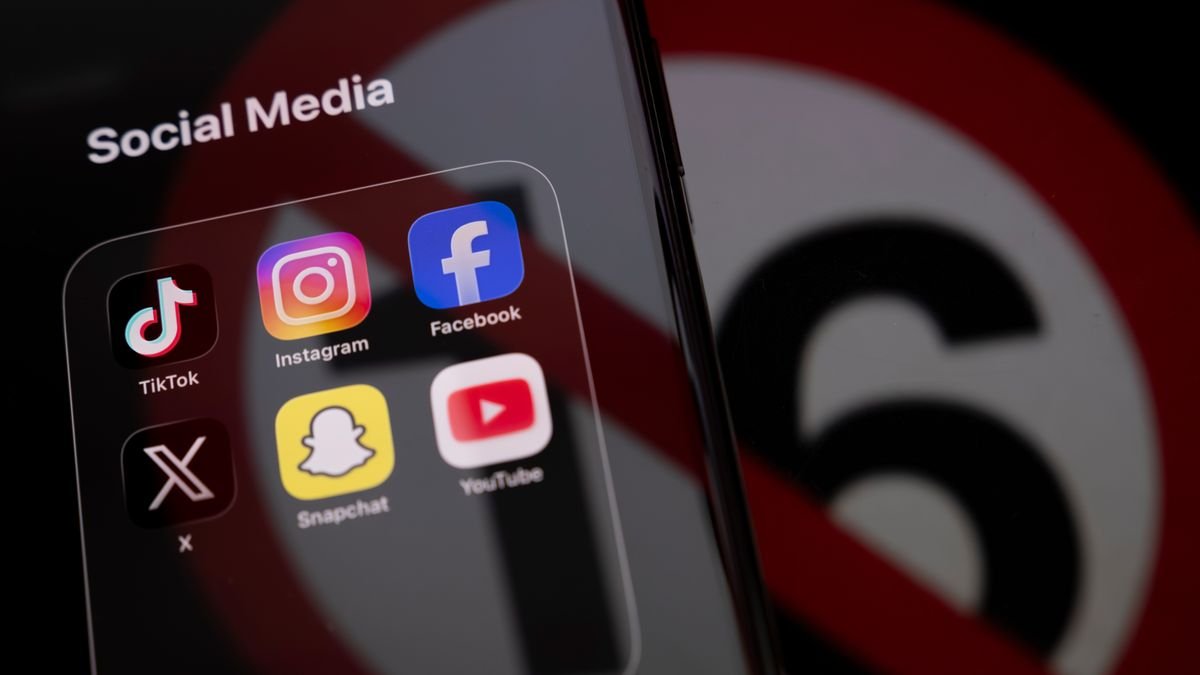

Fourteen-year-old Evie Thomas encountered a familiar issue when she attempted to access Snapchat and received a notification that her account had been locked. This scenario is increasingly common among teenagers in Australia, where an across-the-board prohibition on under-16s using major social media platforms was implemented last December. Despite this restriction, Evie’s online behavior has remained consistent.
During an interview with ITV News, Evie expressed her view that denying individuals access to something and forcibly removing that option without offering alternatives often leads to heightened desire for the forbidden activity. This perspective highlights a central dilemma in the ongoing discussion about whether prohibiting young people from using social media truly safeguards them or merely drives their activities underground.
Australia’s initiative has captured global attention, with 15-year-old Noah Jones challenging the government in court, arguing that while accounts were deactivated, harmful content and its creators persist online. Initial outcomes in the country are mixed: authorities report nearly five million accounts deactivated, but critics caution about potential unintended repercussions, such as teenagers migrating to less regulated platforms and concerns regarding stringent age verification protocols.
In the United Kingdom, policymakers are closely monitoring these developments. Recently, Members of Parliament rejected a proposal for an Australia-style ban and instead endorsed flexible ministerial powers that could enable the government to limit children’s access to specific social media features or platforms deemed harmful. The parliamentary vote, with 307 against and 173 in favor of a complete ban, underscores the challenges faced by ministers in overseeing children’s online interactions.
Labour minister Olivia Bailey stated that the government’s consultation process would gather feedback to influence future actions, which could involve restricting children’s access to platforms like Instagram and TikTok. Meanwhile, Conservative Shadow Education Secretary Laura Trott described the situation as urgent, citing survey data indicating that about 40% of children encounter explicit content during the school day, intensifying pressure on policymakers to take decisive action.
Experts emphasize that the implications of social media extend beyond mere screen time. Studies conducted by the National Library of Medicine reveal that spending more than three hours daily on social platforms can double the risk of negative mental health outcomes for adolescents aged 12 to 15, contributing to issues like anxiety, depression, and disrupted sleep patterns. Self-esteem may suffer, particularly when young individuals compare themselves to the curated content of others, while exposure to cyberbullying, violent or sexual material, and excessive reliance on digital interactions further heightens risks.
For parents, the stakes are significant. Justine Roberts, the founder of Mumsnet and an advocate for prohibiting under-16s from using social media, notes the challenges families face in managing the addictive nature of these platforms. She highlights attempts by parents to cancel phone contracts or remove devices, only to witness the problem resurfacing due to peer pressure or circumvention tactics. Roberts emphasizes the difficulty of competing against a business model built on fostering addiction.
Surveys of Mumsnet users indicate that 61% of parents believe their children are addicted to their phones or social media, with 83% supporting government intervention to restrict access. Research from the Pew Research Center indicates that teenagers predominantly utilize Instagram, Snapchat, and TikTok to maintain social connections, underscoring the central role of mainstream platforms in youth social interactions.
Social media platforms are engineered to optimize user engagement, with algorithms collecting data on user behavior to enhance platform retention. Scott Baxter, a technical director at First Internet, argues that these algorithms can significantly influence what individuals encounter online, particularly impacting younger users whose cognitive faculties are still developing. Baxter suggests that while an outright ban may not be flawless, implementing stricter age restrictions alongside platform accountability and parental controls could reduce children’s exposure to high-risk online environments.
The efficacy of bans remains a contentious issue. While some researchers believe limiting access could mitigate exposure to harmful content, others caution against unintended consequences. Marcantonio Spada, a professor specializing in addictive behaviors and mental health, warns that stringent bans might steer teenagers toward less regulated platforms, diminish opportunities for developing digital literacy, and raise privacy concerns related to extensive personal data requirements for age verification systems.
Spada proposes that setting a lower age threshold, closer to 13 years (aligned with the minimum age criteria of many platforms), could strike a more pragmatic balance between risk reduction and avoiding unforeseen side effects. Mental health practitioners working with adolescents stress the importance of education and digital literacy, advocating for guidance on navigating online spaces safely rather than complete shielding.
Certain technology experts argue that partial regulation could still yield benefits. Scott Baxter reiterates that reducing children’s exposure to the most prominent and algorithm-driven platforms could have a tangible positive impact, even if a ban cannot entirely eradicate online risks.
The UK government has initiated a public consultation on the possibility of curbing social media use for under-16s, running from March 2 to May 26, 2026. Various stakeholders, including parents, young people, educators, children’s advocacy groups, academics, and technology providers, are encouraged to contribute their perspectives on a range of interventions, from a