

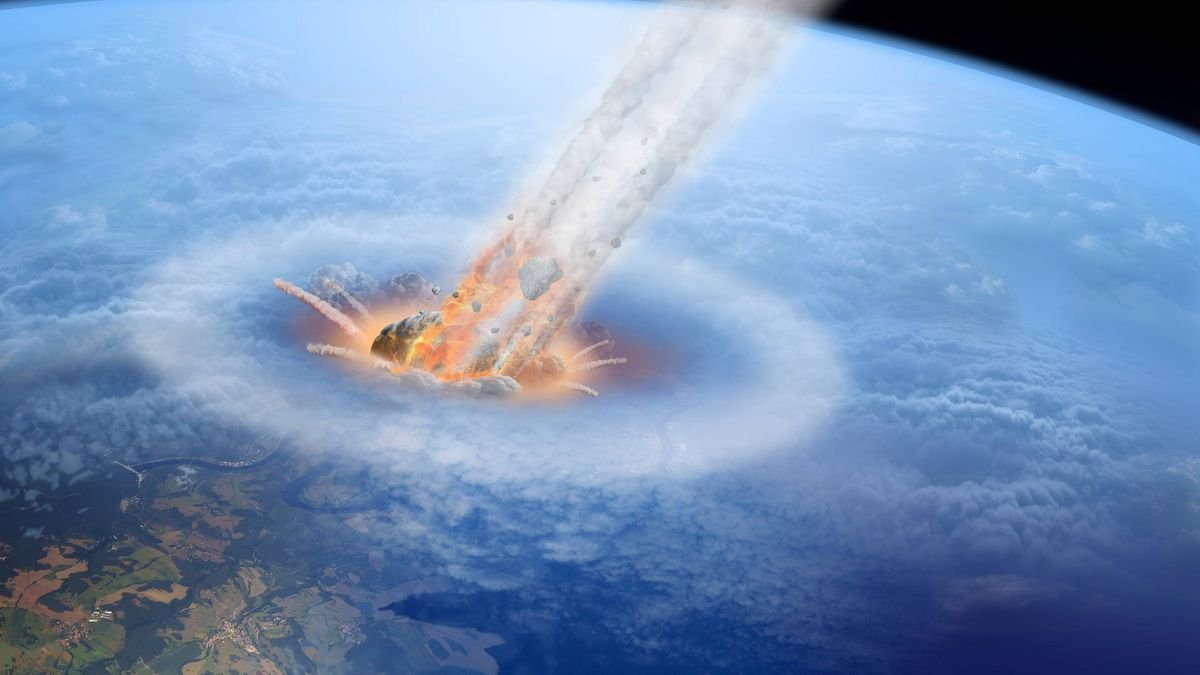

A colossal impact in the vicinity of Yorkshire’s coast led to a gigantic tsunami taller than the iconic Big Ben clock tower, which surged through the ancient North Sea. After a prolonged period of debate spanning twenty years, experts have now confirmed that a 160-meter-wide asteroid collided with the southern North Sea approximately 40 million years ago, creating a crater and generating a massive wave over 100 meters (330 feet) high.
Advanced seismic imaging and unique minerals have unequivocally proven that the mysterious Silverpit structure, buried 700 meters beneath the seafloor and around 80 miles offshore, is a rare and well-preserved impact crater. This groundbreaking discovery, detailed in a report by Science Daily, has put an end to years of uncertainty surrounding the origin of the Silverpit formation.
Initially discovered in 2002, the distinctive bullseye shape of the Silverpit crater, encompassed by circular faults stretching about 20 kilometers, sparked debates among geologists. While theories of asteroid impact, underground salt instability, and volcanic activity circulated, a recent study published in Nature Communications has conclusively supported the asteroid impact theory, refuting previous doubts.
Dr. Uisdean Nicholson, leading the research at Heriot-Watt University in Edinburgh, expressed gratitude for the fortuitous combination of new seismic imaging techniques and samples from an offshore oil well. Analysis of shocked quartz and feldspar deep within the crater provided indisputable evidence supporting the impact hypothesis, confirming the catastrophic event’s occurrence.
According to the research team’s analysis, the asteroid struck the area from the west at a shallow angle, causing a massive wall of seawater and debris to be ejected instantly. The subsequent collapse of this wall resulted in a colossal tsunami that dwarfed modern storm surges, reshaping the surrounding region.
Professor Gareth Collins from Imperial College London, who participated in the 2009 deliberations and contributed to the new simulations, hailed the recent evidence as the definitive resolution to the debate. He emphasized the opportunity to delve deeper into understanding planetary impacts with the wealth of new data now available.