

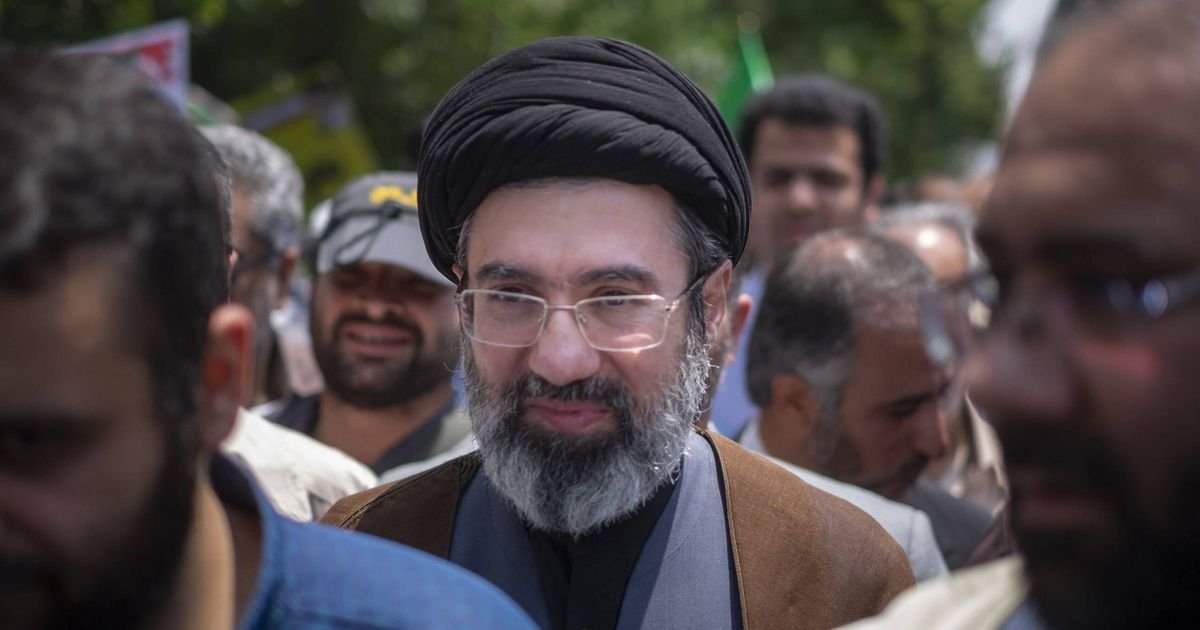

Iran’s recently appointed Supreme Leader has made his first public statement following rumors of his critical condition. Mojtaba Khamenei, aged 56, was reportedly hospitalized at Sina University Hospital in Tehran, Iran, where security measures were heightened. However, shortly after these reports emerged, Iranian state media disclosed that the new leader was set to address the nation.
A broadcasted message attributed to Khamenei aired on state television declared that all US military bases in the region should be shut down immediately to prevent potential attacks. The Supreme Leader also affirmed the continued closure of the Strait of Hormuz as a tactic to exert pressure on the US and Israel.
“We extend a message to regional leaders emphasizing our intention to foster positive relations with neighboring countries,” the statement asserted. “Nevertheless, the presence of US bases in these nations being utilized to target Iran does not serve regional interests and must cease. We harbor no hostility towards neighboring countries; our focus is solely on American bases.”
The statement further expressed gratitude to the Iranian populace for their resilience against adversaries and offered condolences to those who suffered losses during conflicts. Mojtaba empathized with individuals who had experienced personal tragedies, drawing on his own family’s losses. He pledged retribution for fallen martyrs, stressing that justice would be pursued.
The release of this statement followed reports suggesting Khamenei had sustained severe injuries. According to The Sun, a source in Tehran indicated that the new leader was in critical condition at Sina University Hospital, with security measures implemented in the vicinity.
On Sunday, Iranian state media confirmed Mojtaba, the second son of the late Ayatollah Ali Khamenei, as his successor. Despite his relative anonymity in public life, Mojtaba is known to have close ties with the Islamic Revolutionary Guard Corps (IRGC), leading to US sanctions in 2019 due to his involvement in advancing his father’s regional objectives.
Criticism has been directed towards the hereditary succession within Iran’s leadership, a stance previously voiced by both Ali Khamenei and Ruhollah Khomeini, the Islamic Republic’s founder, particularly in light of the toppled Pahlavi monarchy after the 1979 Islamic Revolution.