

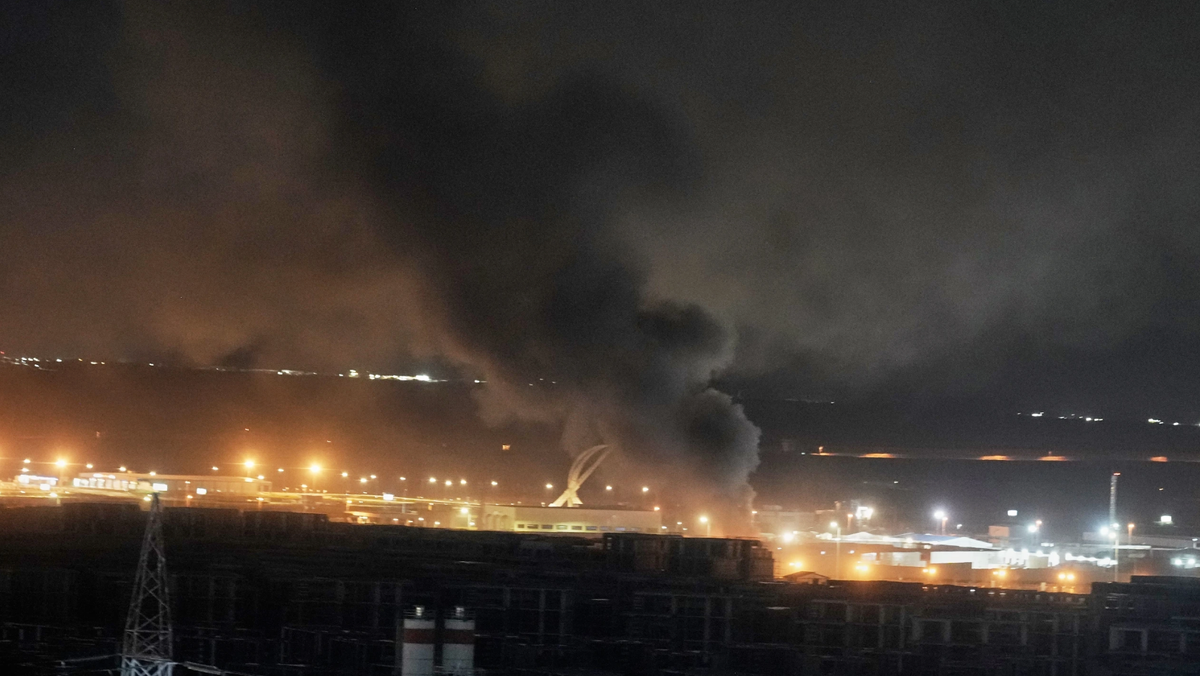

An international airport in Bahrain’s Muharraq Island became the target of an Iranian attack amid escalating tensions in the Middle East. The assault, which also affected commercial ships, was part of Iran’s efforts to increase global economic pressure on the United States and Israel to end the ongoing conflict.
Following the attack, the airport was engulfed in flames, prompting authorities to advise people to stay indoors and close windows to avoid smoke inhalation. The airport, housing jet fuel tanks and serving the kingdom’s oil industry, suffered significant damage.
In a separate incident, an Iranian attack on Iraq’s Basra port resulted in the death of at least one person and forced the suspension of operations at all of Iraq’s oil terminals. The attack, directed at a vessel during a ship-to-ship transfer at the port in the Persian Gulf, disrupted oil operations but left commercial ports operational.
According to the Pentagon, the initial week of conflict with Iran cost the United States a staggering $11.3 billion (£8.47 billion). The escalating conflict has disrupted trade routes, affected fuel and fertilizer supplies from the Gulf, and posed threats to air traffic in one of the world’s busiest regions.
Iran’s targeting of oil fields and refineries in Gulf Arab nations, along with the obstruction of cargo traffic through the vital Strait of Hormuz, has severely impacted global energy markets. To counter these effects, the International Energy Agency has agreed to release a record 400 million barrels of emergency oil reserves. Additionally, the US plans to release 172 million barrels of oil from its Strategic Petroleum Reserve to stabilize prices in the coming week.