


As tensions escalate in the Middle East, concerns are rising about potential global implications. Missiles continue to target regions popular among British holidaymakers, such as Dubai in the United Arab Emirates. The British Prime Minister’s cautious approach to involvement has drawn criticism, including from Donald Trump.
A former NATO commander, Richard Shirreff, is now warning that the ongoing conflict could escalate into a worldwide crisis. Shirreff, who previously served as deputy supreme allied commander of NATO in Europe, expressed deep concern, stating that he cannot recall a more precarious moment in geopolitics in his lifetime.
He further expressed his fear that future historians may view the recent attempts at “regime change from the skies” as the catalyst for a third world war.
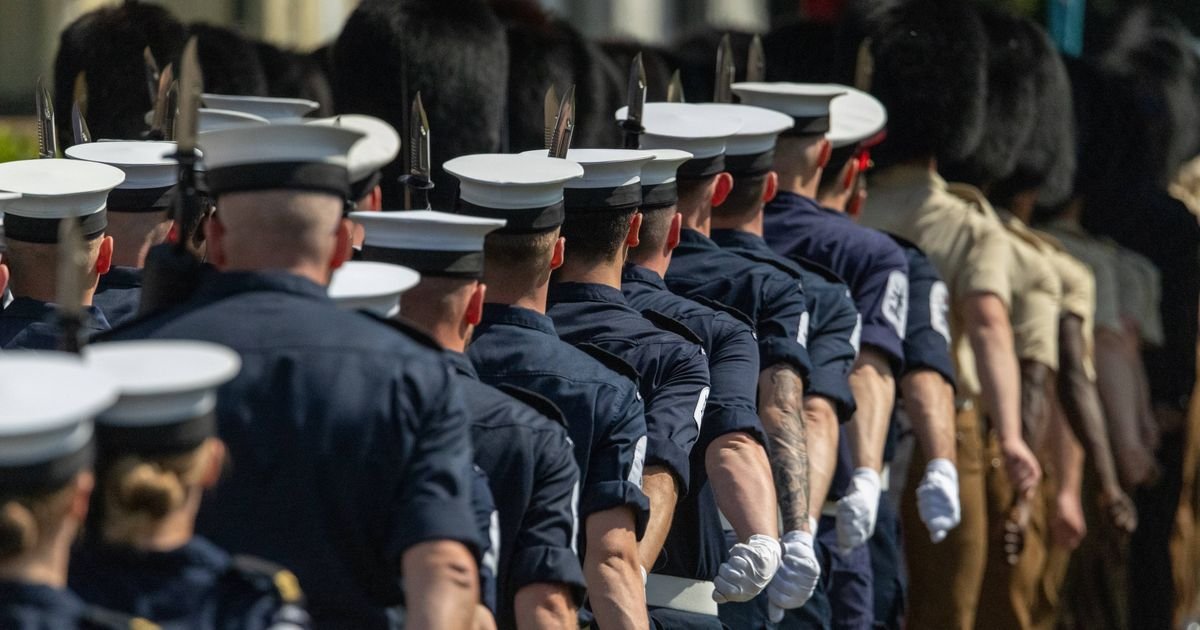
In the event of a potential World War III outbreak, there could be a significant call for Britons to join the armed forces to address international threats. One possible approach to achieve this could be through conscription, a measure that has not been implemented since 1960, according to reports.
Author and historian David Swift suggested that if conscription were reintroduced, individuals might face substantial financial penalties rather than imprisonment. He highlighted the case of Greece, where a penalty of €6,000 (£5,213.19) existed for failing to register, although the fine was considered for removal in 2019.
Swift speculated that Britain might adopt a similar model to Switzerland, where citizens who decline military service are required to pay an additional three percent in taxes for the duration they were meant to serve. This financial penalty serves as a significant deterrent without resorting to imprisonment.
Swift also mentioned that certain demographics in the UK could be particularly targeted for conscription, with exemptions possibly granted to those in crucial occupations related to defense industries and industrial capacity. He suggested that unemployed graduates could be a focus for military conscription, potentially working in these industries instead.
The escalating conflict in the Middle East has caused a surge in oil prices, surpassing $100 (£75) per barrel. In response, countries like Croatia and South Korea have implemented price caps on fuel to mitigate the impact.
In compliance with data privacy regulations, this website and its partners utilize cookies and other identifiers to enhance user experience, analyze site usage, and display personalized advertising. Users have the option to opt out of data sharing by clicking the designated button on the webpage. By using the website and services, users consent to the use of cookies and agree to the practices outlined in the Privacy Notice and Terms and Conditions.